
Centre soon to launch “Battery Minerals” processing scheme
The upcoming initiative seeks to address a key gap in India’s critical minerals supply chain.
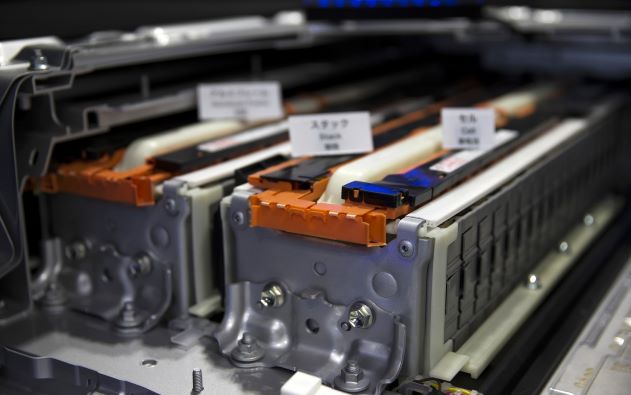 EV batteries driving up demand of Cobalt, Nickle & Lithium
The Central Government is set to introduce a new policy aimed at building a domestic processing value chain for battery minerals within the next three months, in a significant push to reduce India’s reliance on imported critical resources and strengthen its clean energy ecosystem.
While addressing the Material Recycling Association of India (MRAI) Conference, Mines Secretary VL Kantha Rao said the Ministry of Mines is in the final stages of designing the scheme. “We are very close to finalising a policy for the processing value chain for battery minerals,” he held, adding that the proposal is expected to receive approval within the next quarter.
The initiative seeks to address a key gap in India’s critical minerals supply chain. While the country has made progress in acquiring overseas mineral assets and expanding domestic exploration, limited processing capabilities have hindered its ability to convert raw materials into battery-grade components.
The move comes amid growing demand from India’s rapidly expanding electric vehicle (EV) sector and clean energy industries. A joint report by the Institute for Energy Economics and Financial Analysis (IEEFA) and JMK Research & Analytics revealed that although India could achieve up to 100% localisation in several EV components by 2030, the absence of domestic capabilities in semiconductors, rare-earth magnets and advanced materials could restrict deeper value creation.
Recycling is expected to play a central role in bridging this gap. The government’s Rs 1,500 crore incentive scheme for recovering critical minerals from secondary sources has exceeded expectations. Against a target of 270 kilotonnes of recycling capacity, commitments for 850 kilotonnes have been received, with 58 recyclers already approved under the programme.
Launched under the National Critical Mineral Mission, the scheme focuses on extracting lithium, cobalt, nickel, graphite and other key materials from end-of-life batteries, electronic waste and industrial scrap.
Experts note that India’s EV manufacturing ecosystem still faces vulnerabilities, with several components dependent on imports. For instance, traction motors currently have only 50–60% localisation due to reliance on imported rare-earth magnets, while control units depend heavily on foreign semiconductors.
Despite these challenges, investments in powertrain systems, electronics and charging infrastructure are increasing, raising hopes that India could achieve near-complete localisation in several segments by the end of the decade.