

As “Day Zero” Warnings Persist, India’s Cities Still Aren’t Catching the Rain They Get
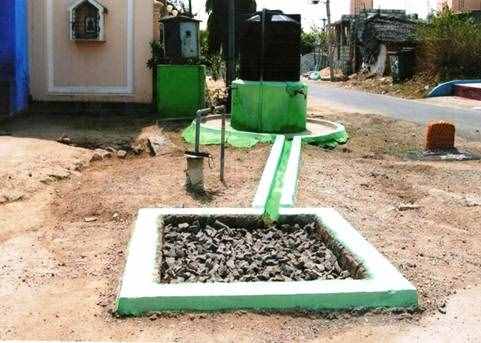 Rainwater harvesting RWH
Down To Earth’s August 1–15 print edition leads with a factsheet on a problem this desk has flagged before: India’s cities are not catching the rain that falls on them. The framing, from water editor Sushmita Sengupta, is direct — “day zero” conditions are becoming a recurring feature of the news cycle rather than a one-off crisis, and the fix (rainwater harvesting, done properly and maintained) is neither new nor exotic. What’s changed is the data documenting how far short of that fix Indian cities are still falling.
The Central Ground Water Board’s latest annual groundwater quality report gives the clearest recent picture. Karnataka’s statewide groundwater extraction rate eased from 68.44% in 2024 to 66.49% in 2025 — real progress, and the CGWB credits roughly 17 lakh water-conservation structures built under the Jal Shakti Abhiyan for the improvement. But the state average masks a sharper problem underneath it: five districts, including Bengaluru Urban, remain in what the CGWB classifies as “overexploited” territory, with extraction running well past 100% of annual recharge in several of them — meaning aquifers are being drawn down faster than rain and recharge structures can refill them, year after year.
Warnings On Record Clearly Not Enough
NITI Aayog’s Composite Water Management Index first flagged 21 Indian cities — including Delhi, Bengaluru, Chennai and Hyderabad — as at risk of running out of groundwater years ago, in a warning that has been re-quoted, and re-missed, through successive water crises since. Chennai’s 2019 near-collapse became the case study everyone cites; less discussed is how predictable that collapse was in the CGWB’s own data years before it happened, and how the pattern of building rainwater-harvesting infrastructure and then letting maintenance lapse once the immediate pressure eases keeps recurring in city after city.
| Bengaluru’s groundwater extraction rate eased from 68.44% to 66.49% in a year — but Bengaluru Urban itself remains among five Karnataka districts still classified as overexploited. |
The government’s current response runs through two linked programmes: the Jal Shakti Abhiyan, targeting artificial recharge and watershed management across 148 identified water-scarce districts nationally, and Jal Sanchay Jan Bhagidari, a community-participation campaign meant to turn household and neighbourhood-level rainwater harvesting into what officials are billing as a mass movement rather than a compliance requirement for new buildings. Both aim at the same structural gap Down To Earth’s factsheet describes: India receives an enormous, if unevenly distributed, volume of annual rainfall — by some estimates over 4,000 billion cubic metres nationally — but conventional estimates suggest only a fraction of urban rainfall is actually captured for reuse or recharge, with the rest running off into drains, evaporating or flowing to the sea.
WHY THIS BELONGS NEXT TO THE ENERGY STORY
Water and power stress are no longer separate beats. This desk has separately covered how reduced hydropower generation — itself a function of the same rainfall variability driving urban water stress — is pushing India back toward coal even as solar and wind hit record output. The Punjab and Karnataka groundwater numbers, the Bengaluru and Chennai case studies, and the coal-dependency data all trace back to the same underlying vulnerability: an economy and a grid both built on the assumption of a predictable monsoon, at a moment when that predictability can no longer be assumed. Rainwater harvesting, in that light, isn’t just a municipal fix — it’s infrastructure resilience with implications for the power sector CREA and others have already started pricing into their forecasts.