
Sugar Out, Grain In: India’s Ethanol Programme Swaps One Food Crop for Another
From November 01, oil companies wouldn’t buy ethanol made from cane juice, syrup or B-heavy molasses. The 11-billion-litre tender leans on maize and surplus rice, and the carbon case is far from settled.
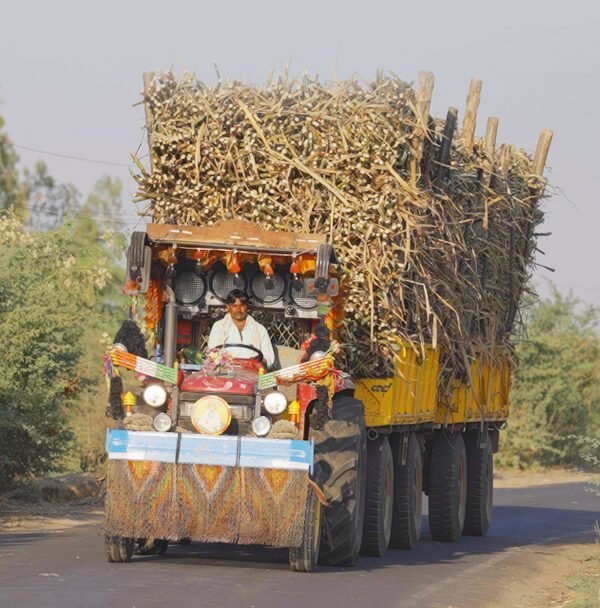
India’s ethanol-blending programme entered a new supply year on 1 November with a sharp change of feedstock. In the tender issued on 16 October, state oil marketing companies Indian Oil, BPCL and HPCL sought about 11 billion litres of ethanol for November 2026 to October 2027. Ethanol made from sugarcane juice, sugar syrup and B-heavy molasses is excluded, and the government has directed that sugar diversion for ethanol be cut to zero.
Why Sugar Was Dropped
The trigger is sugar supply. Production is estimated to fall from about 31 million tonnes last year to roughly 27 to 29 million tonnes this season, against annual domestic consumption of about 28.5 million tonnes, The Week reported, citing weak rainfall and crop stress in Maharashtra and Karnataka. Retail sugar prices are about Rs 70 to 80 a kilogram in many markets, and officials have cited record-high prices.
What remains eligible is ethanol from maize, damaged food grains, surplus Food Corporation of India rice and C-heavy molasses. Grain-based distillers have expanded capacity and now account for most incremental ethanol supply, The Week noted. The tender also trims support for corn ethanol, with the incentive cut from Rs 5.79 to Rs 2.79 a litre and the procurement price lowered from Rs 71.86 to Rs 68.86, according to the Free Press Journal.
Policy Cross-Currents
The change arrives as other levers move. On 26 October the Central Motor Vehicles Rules were amended to permit fuels with up to 100% ethanol in flex-fuel vehicles. Three days later the Supreme Court questioned the supply architecture for such vehicles. Petroleum Minister Hardeep Singh Puri has said there are no immediate plans to raise blending beyond the current 20%.
For sugar mills, ethanol had become a revenue buffer against sugar price swings. B-heavy molasses ethanol was historically among the cheapest options for oil companies, so replacing it with grain-based supply may raise procurement costs. It is unclear whether those costs will be absorbed by the oil companies or passed into fuel prices.
The Carbon Question
The change also sharpens a climate debate. A Cerulogy analysis for the campaign group Transport & Environment, published last November, found that global biofuel production emits on average 16% more CO2 than the fossil fuels it replaces once indirect land-use effects are counted. It estimated that crop-based fuels occupy about 32 million hectares of land to meet just 4% of global transport energy demand, and that 90% of biofuel production still relies on food crops. The report comes from an advocacy group and its figures are global averages, not Indian estimates, but the mechanism it describes, extra land and crops brought into production to make up for what fuel consumes, applies in principle to any crop-based ethanol.
None of the Indian reporting reviewed quantifies the emissions effect of the switch. Maize needs significantly less water than sugarcane and can be grown over a wider area, The Week notes, and rising distiller demand has improved prices for maize farmers and encouraged more cultivation. Whether additional maize comes from new land, from displaced crops or from higher yields will largely determine the carbon outcome, and no data in the sources settles that.
India’s own case for ethanol rests on energy security and rural incomes rather than carbon alone. India reached about 19% blending in 2024-25, with more than 10 billion litres blended, according to S&P Global. The new tender shows how fragile that model can be when the feedstock depends on monsoon-dependent crops that also feed people.
For the climate argument, the practical test is evidence: land-use data on maize expansion, and lifecycle accounting that includes it.