India’s Ethanol Programme: Strategic Need, Economic Caveat, Sustainability Question Mark
 In India’s Ethanol Rush, Sugarcane Farmers Feel Neglected
Let us start with what is not in dispute. India crossed the 20 per cent ethanol blending milestone in November 2025 — five years ahead of the original 2030 deadline and two months before the accelerated 2025–26 target. From April 1, 2026, E20 became mandatory at petrol pumps across all states and Union Territories. Since Ethanol Supply Year 2014–15, the programme has substituted over 28.9 million tonnes of crude oil, saved more than ₹1.59 lakh crore in foreign exchange, and directed ₹1.18 lakh crore in payments to farmers and distilleries. Those are not small numbers, and they are not contested.
The government is now looking beyond E20. In April 2026, the Ministry of Road Transport and Highways released a draft notification recognising flex-fuel vehicles capable of running on E85 and E100, and 48 retail outlets have already begun offering E85 fuel. The distillery industry, buoyed by an installed capacity of 20 billion litres against current offtake of around 12–13 billion litres, is lobbying hard for a clear E25–30 roadmap. Which is where the friction has emerged.
The Strategic Case: Necessary but Not Sufficient
India’s dependence on crude imports — running at 85–87 per cent of consumption — makes any domestic alternative strategically valuable. The ethanol programme is a genuine partial hedge: every billion litres blended displaces real crude and reduces exposure to Middle East supply shocks and a volatile rupee–dollar exchange rate. After the geopolitical turbulence of 2025, including West Asia tensions that sent spot LNG prices surging, that argument has only strengthened.
But the qualifier ‘partial’ matters. Even at E20, ethanol addresses roughly one-fifth of petrol consumption, which itself is a declining share of India’s total energy import bill once diesel, LPG, and natural gas are factored in. The deeper decarbonisation of Indian transport will come from electric vehicles and green hydrogen, not from raising ethanol blends to E30 or E40 in an era when two- and three-wheelers — India’s core ICE market — are already rapidly going electric. CEEW modelling suggests petrol demand could peak at around 5,700 crore litres by 2032 and fall sharply to 3,700 crore litres by 2050 as EVs scale. Ethanol plants being commissioned today carry a 20–30-year operating life: some of this capacity may become stranded assets within a decade, chasing a market that EVs are shrinking. The strategic case is sound for now; its longevity deserves a more honest audit than the programme has received.
Whose Farmers, Exactly?
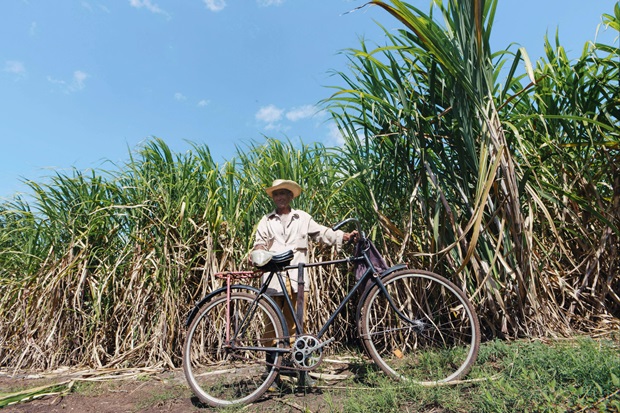
The farmer welfare claim is the most politically potent and the most selectively framed. The ethanol programme has, in practice, been built primarily on first-generation (1G) feedstocks — sugarcane-derived B-heavy molasses and, increasingly, grains. The benefit has flowed disproportionately to large cane-growing states: Uttar Pradesh, Maharashtra, and Karnataka. The payments through the distillery route have helped clear chronic sugar mill arrears to farmers, which is welcome. But this is, in significant measure, a solution to a political problem created by the same policy environment — cane price fixation, guaranteed procurement, and a structurally oversupplied sugar sector — rather than a broad-based rural income intervention.
More tellingly, the feedstock mix has shifted dramatically. Grain-based ethanol, which was zero in ESY 2017–18, accounted for 72.4 per cent of total supply in ESY 2025–26, with maize at 45.2 per cent and rice at 27.2 per cent. The government has allocated 90 lakh tonnes of rice for ethanol production in 2025–26, partly financed by reducing the share of broken rice distributed to the poor under the Public Distribution System from 25 per cent to 10 per cent. Meanwhile, maize acreage in Kharif 2025–26 expanded by roughly nine lakh hectares, with that land largely coming from pulses and oilseeds — two crop categories where India already runs chronic deficits. The farmer welfare story, examined carefully, is a story about which farmers and at what cost to other farmers and consumers. It has not been told that way. Perhaps deliberately, nowing fully well that on a farmer welfare narrative, counter arguments will be considered much more carefully.
The Green Fork in the Road: 1G’s Water Problem vs 2G/CBG’s Promise
The sustainability argument is where the programme splits most decisively into its better and worse selves. For 1G ethanol derived from sugarcane, the water arithmetic is damning: according to NITI Aayog’s own roadmap report, producing one litre of ethanol from sugarcane consumes approximately 2,860 to 3,636 litres of water. Rice is worse: one kg of paddy requires roughly 4,000 litres. The Central Ground Water Board’s 2025 assessment already categorises hundreds of units across India as over-exploited or critical — and several of the key ethanol-producing districts in UP and Karnataka draw from precisely those depleted aquifers. A programme presented as green that compounds groundwater depletion in water-stressed regions is an uncomfortable paradox that policymakers have been reluctant to confront directly.
The government’s defence — that modern distilleries use only 3–5 litres of process water per litre of ethanol through Zero Liquid Discharge technology — is technically accurate but misses the point. The water stress is embedded in the field, not the factory. It cannot be engineered away by better industrial process design; it requires a different crop.
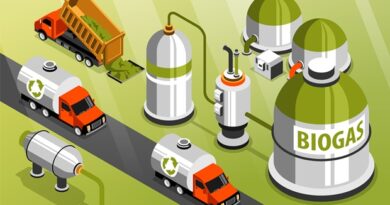
Which is exactly what the second-generation ethanol and Compressed Biogas (CBG) story offers. CBG, produced from paddy straw (resolving Punjab’s stubble-burning crisis), press mud from sugar mills, municipal solid waste, and cattle dung, is the genuinely circular version of this programme. India has approximately 210 CBG plants operational today and 324 more under construction, with blending already approaching 2 per cent of CNG/PNG against a target of 3 per cent for FY2026–27. Under the SATAT scheme’s 5,000-plant ambition, the potential feedstock availability is staggering — estimates suggest up to 62 MMT of bio-CNG annually. Maharashtra’s state CBG policy, approved in May 2026, points to how this can scale with integrated feedstock contracts, city gas network synchronisation, and viability gap funding. This is the part of India’s biofuels programme that should be getting the most resources and the most political airtime. It currently gets neither.
Where the Criticism Will Be Fully Deserved: The Import Trap
India’s ethanol programme has, so far, been an import-substitution story. That is its core logic and its primary virtue. The moment it becomes an import-dependent story, every strategic, economic, and environmental claim it rests on collapses simultaneously — and that moment may be closer than comfortable.
The India–US interim trade framework announced in February 2026 is the flashing amber light. Indian Trade Minister Piyush Goyal explicitly flagged ethanol as a ‘sensitive’ agricultural product protected in the negotiations. But the US corn lobby was equally explicit about reading the deal as an opening. Mark Mueller, president of the Iowa Corn Growers Association, called it “a win for corn farmers,” noting that India’s growing economy creates demand for “Iowa-grown corn, ethanol and dried distillers’ grains.” The Nebraska Corn Growers Association was already welcoming the “potential demand for Nebraska corn, whether in the raw form or in value-added products such as ethanol.” These are not idle industry comments; they reflect a deliberate US negotiating position.
US corn-based ethanol is produced from a crop that benefits from massive federal subsidies under the US Farm Bill, high-yield GMO varieties India does not permit domestically, and an industrial agriculture infrastructure that makes American ethanol structurally cheaper than anything India produces from domestic grain at Indian input cost structures. If India — under trade pressure or supply shortfall — begins importing US ethanol or the corn feedstock that leads directly to it, the programme that was sold as a national energy security measure will have created a new import dependency to replace the old one. The forex savings will be offset against ethanol import bills. The farmer payments will flow to Iowa and Nebraska, not UP and Maharashtra.
The criticism would be fully deserved not because the ethanol programme is wrong in conception, but because it would have been implemented in a way that inverted its own logic. A programme justified on energy sovereignty grounds has no business importing the energy it was meant to produce domestically. Any concession on ethanol — direct or indirect through corn and DDGS — in the broader bilateral trade agreement would represent a policy failure of the first order, regardless of what other concessions are secured in return.
The Scorecard and the Path Forward
India’s ethanol programme deserves credit for execution discipline: it set targets, it met them early, and it built a supply chain that did not exist a decade ago. The strategic case for domestic biofuels in a country with India’s import dependence and geopolitical exposure is legitimate. But it must be made honestly. The farmer welfare benefits are real but narrow; the sustainability credentials depend almost entirely on which feedstock is being counted; and the programme’s long-term value is contingent on it remaining genuinely domestic.
The most important policy pivot available to India now is not E25 or E30 — it is a decisive acceleration of 2G ethanol and CBG using agricultural waste, municipal organic matter, and industrial residues. These are the feedstocks that address stubble burning, groundwater stress, food security, and organic fertiliser availability simultaneously. The 1G sugar-and-grain engine has done its job of building the market; it is time to transition the incentive architecture toward feedstocks that do not compete with food, water, or the plate.
If the government instead uses the E20 success as a mandate to deepen grain-based 1G production, open the door to US corn imports under trade pressure, and chase E85 and E100 targets on a water-stressed agricultural base, the criticism will not come from opponents of the energy transition. It will come from within the logic of the programme itself.