
Haryana govt to establish 4 new waste-to-energy plants
The projects, planned for the Hisar, Ambala, Faridabad and Gurugram clusters, will collectively process around 5,000 tonnes of waste every day and generate at least 50 MW of energy.
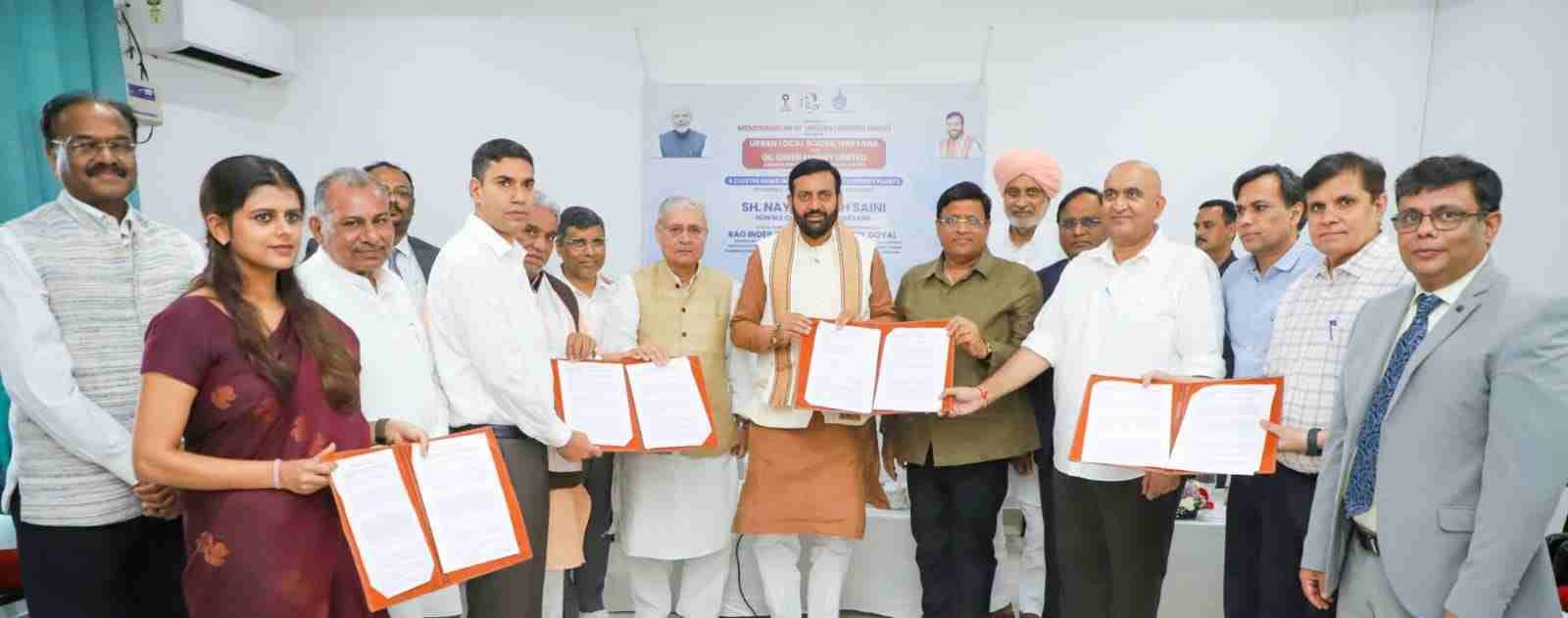
The Haryana government has signed a Memorandum of Understanding (MoU) with Oil Green Energy Ltd, a wholly owned subsidiary of Oil India Ltd, to establish four integrated waste-to-energy plants across the state.
The projects, planned for the Hisar, Ambala, Faridabad and Gurugram clusters, will collectively process around 5,000 tonnes of waste every day. These four waste-to-energy projects are expected to generate at least 50 MW of energy. The plants are targeted to become operational by October 2028.
The initiative is aimed at strengthening scientific waste management in Haryana while converting municipal waste into a source of energy. Chief Minister Nayab Singh Saini said the partnership with Oil Green Energy would support urban development and bring a significant change in the way waste is processed and utilised across the state.
Four regional waste-to-energy plants
The Hisar waste-to-energy cluster will be the first to receive an integrated waste-to-energy facility. Covering urban local bodies in Hisar, Hansi, Fatehabad and Jind districts, the plant will have the capacity to process 500 tonnes of waste per day and generate a minimum of 5 MW of electricity.
The Ambala waste-to-energy cluster, covering urban local bodies in Ambala, Yamunanagar and Panchkula districts, will have a larger facility capable of processing 900 tonnes of waste daily and generating at least 9 MW.
The Faridabad cluster will host a plant with a daily processing capacity of 1,600 tonnes, with minimum power generation of 16 MW.
The largest waste-to-energy facility is planned for the Gurugram cluster, covering Gurugram district. It will process approximately 2,000 tonnes of waste every day and generate at least 20 MW of energy.
Together, the four waste-to-energy projects are expected to create a large-scale waste-to-energy network, enabling Haryana to process thousands of tonnes of urban waste through organised facilities while recovering energy from waste that would otherwise require disposal.
Recently, NTPC announced plans to develop waste-to-charcoal plants at the Gurugram’s Bandhwari landfill site and Faridabad’s Motuka each costing Rs 500 crore.