
Too Much Water, Too Little Power: The 2026 Monsoon’s First Flood Wave Exposes India’s Double Bind
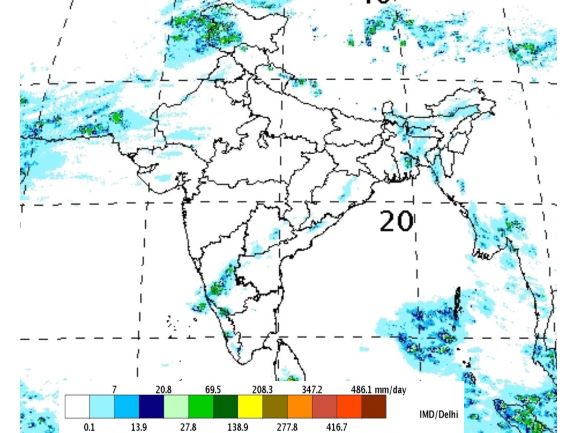 Indian Monsoons hit Andamans. Pic: IMD
Start in the Brahmaputra basin, where the 2026 monsoon announced itself with force this week. Across Dhemaji, Lakhimpur, Dibrugarh and three other districts, floodwaters have inundated close to a hundred villages and over 1,600 hectares of standing crops. In Dhemaji, riverbank erosion undermined a railway bridge over the Simen river, partially collapsing it and severing train services to several communities. Upstream, heavy rain triggered landslides in Meghalaya, and in North Sikkim’s Dzongu region, the Phee Khola swept away a Bailey bridge at Phidang, cutting road access. Nagaland has warned of flash floods as the active monsoon phase persists. For the families displaced, these are not statistics but the annual, worsening arithmetic of life along Himalayan rivers.
None of this is unprecedented — and that is precisely the problem. The Centre for Science and Environment’s latest State of India’s Environment assessment recorded extreme weather events on 99% of days in the first eleven months of 2025, claiming over 4,400 lives and damaging more than 17 million hectares of cropland. What was once the exceptional year is becoming the median one. The report’s central prescription — shifting from post-disaster relief to pre-disaster resilience, with nature-based defences like wetland restoration alongside engineered ones — reads with particular force in a week when two bridges fell to rivers behaving as the warming models said they would.
Now turn to the other half of the paradox. Even as the Northeast floods, an S&P Global analysis notes that India’s hydropower generation in June fell by over 6 gigawatts on average compared to a year earlier — at the very moment average electricity demand surged by more than 24 gigawatts on the back of punishing early-summer heat. The shortfall was made up the only way it currently can be: by burning more coal. With forecasters flagging the risk of El Niño conditions strengthening through the southwest monsoon, the squeeze could tighten — less inflow into reservoirs in the catchments that feed India’s hydro fleet, even as erratic cloudbursts flood basins that cannot store the excess.
Hold the two images together and the lesson sharpens. India’s water system and its power system are now the same system, stressed by the same warming. A monsoon that arrives as concentrated, violent bursts rather than steady rain fills few reservoirs but breaks many bridges; it devastates standing crops while leaving turbines under-supplied weeks later. The old planning assumption — that the monsoon is variable but broadly reliable — is quietly expiring, and everything built on it, from dam operation schedules to kharif sowing calendars to power purchase planning, needs re-examination.
The constructive agenda is not mysterious. Catchment restoration and floodplain discipline to slow the water down. Reservoir operations updated for flashier inflows. Solar and storage to shoulder the seasonal burden hydropower can no longer carry alone — a resilience argument for the energy transition that has nothing to do with carbon accounting. And in the Northeast specifically, infrastructure engineered for the rivers of 2040, not the rivers of 1980. The first flood wave of 2026 will not be the last. The only real question is whether it is treated as weather — or as the warning it plainly is.