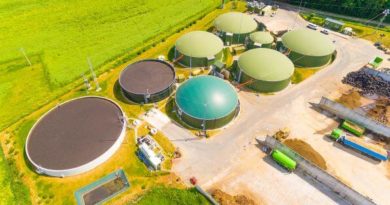
India, Japan tie-up for 1000 biogas plants across country
The CBG initiative is expected to facilitate technology transfer, financial cooperation, and capacity building in the biogas sector.
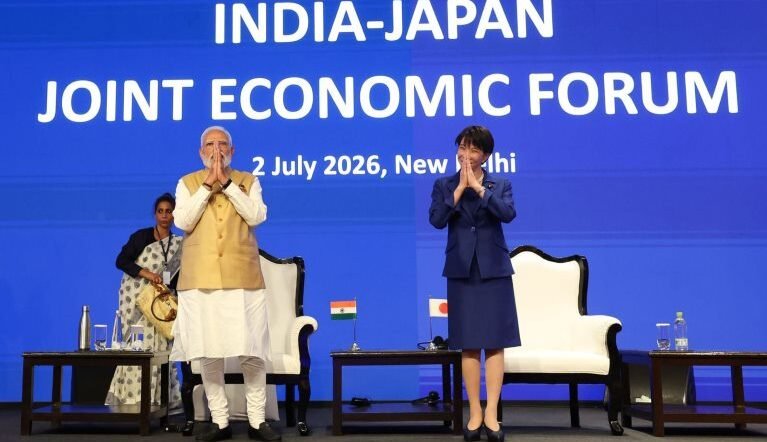
India and Japan have elevated their clean energy partnership with the launch of a dedicated biogas collaboration, placing compressed biogas (CBG) at the centre of efforts to strengthen energy security, rural sustainability and low-carbon growth.
The two countries unveiled the India-Japan Cooperative Biogas for Growth (CBG) Initiative in the presence of the two Prime Ministers of the countries during the 16th India-Japan Annual Summit, marking a significant step toward scaling up biogas production and advancing circular economy practices.
The new initiative aligns with India’s ambitious target of establishing 1,000 biogas and organic fertiliser plants nationwide.
Announced in a joint statement following talks between Prime Minister Narendra Modi and Japanese Prime Minister Sanae Takaichi, the CBG initiative is expected to facilitate technology transfer, financial cooperation, and capacity building in the biogas sector. It also reinforces the role of agricultural waste and organic residues as valuable feedstock for clean fuel production.
The official statement held, “The two Prime Ministers concurred on taking forward their partnership in the clean energy sector and appreciated the launch of the India-Japan Cooperative Biogas for Growth Initiative to scale up biogas production.”
The partnership comes at a time when India is accelerating its transition toward sustainable fuels under programmes such as SATAT Scheme, which promotes CBG as a viable substitute for fossil fuels in transportation and industry. Japan’s expertise in waste-to-energy technologies and efficient biogas systems is expected to complement India’s vast biomass availability and growing energy demand.
To institutionalise cooperation, a Memorandum of Cooperation (MoC) was signed between Japan’s Ministry of Economy, Trade and Industry and India’s Ministry of Cooperation along with the Department of Animal Husbandry and Dairying. The agreement aims to support project development, optimise supply chains for feedstock, and promote the use of organic fertilisers generated as a by-product of biogas plants.
Beyond biogas, the two nations reaffirmed their broader commitment to clean energy collaboration, including emerging fuels such as green hydrogen and ammonia. However, the emphasis on biogas highlights its dual advantage—enhancing energy security while addressing waste management and rural income generation.
Prime Minister Takaichi, who is on a three-day visit to India from July 1 to 3, underscored Japan’s continued support for India’s energy transition goals, including its bid for membership in the International Energy Agency (IEA).