
All automakers to roll-out flex-fuel vehicles: Nitin Gadkari
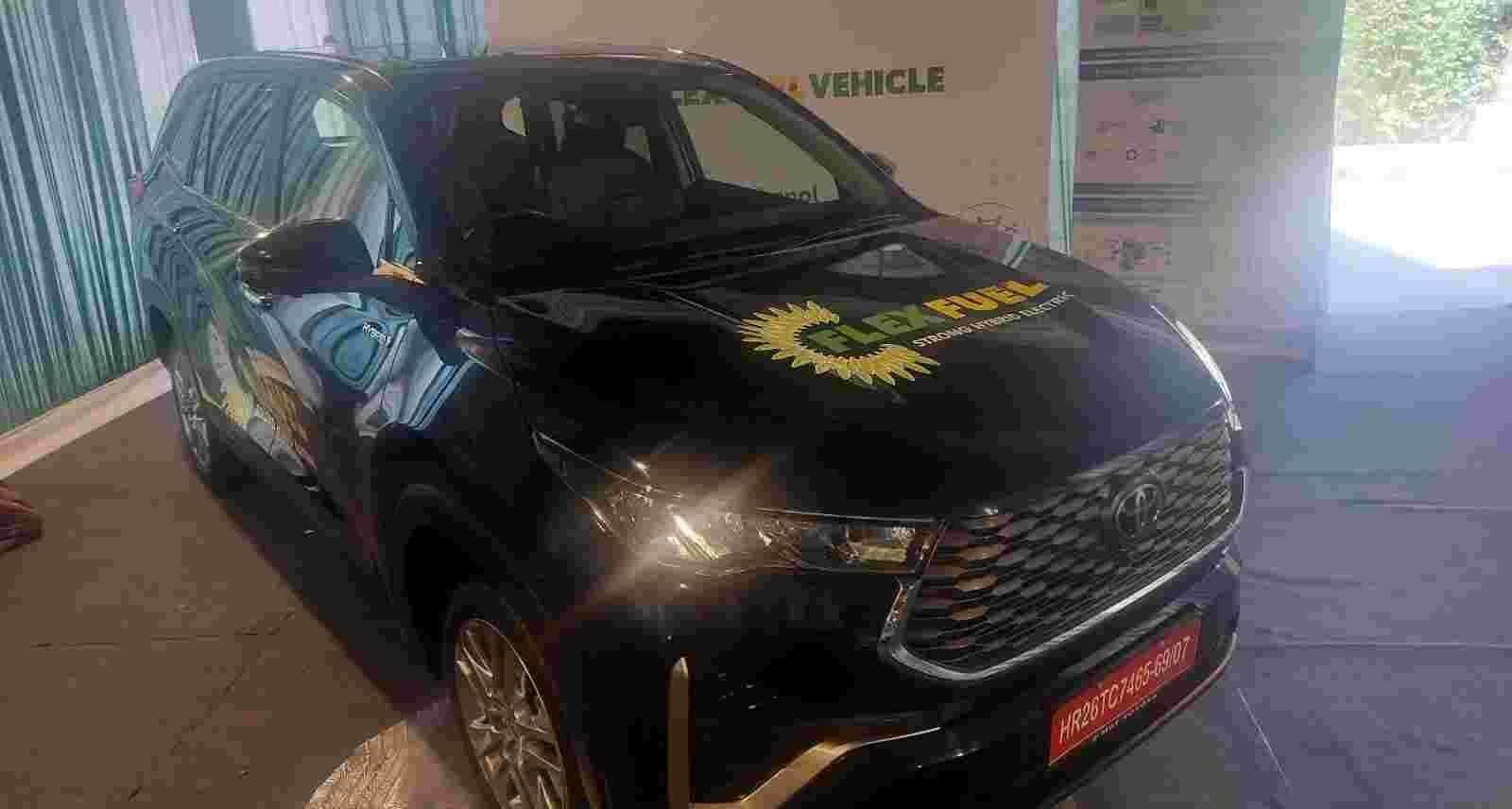
Union Minister Nitin Gadkari has announced that Toyota’s flex-fuel Innova Hycross, capable of running entirely on bioethanol, will be launched in November 2026, marking another milestone in India’s efforts to expand ethanol-based mobility.
Speaking at the 17th edition of KPMG’s ENRich 2026 energy and resources conference in New Delhi, Gadkari said he had been using a pilot version of the Toyota Innova Hycross running on 100% bioethanol for the past 18 months. He added that several automobile manufacturers, including Tata Motors, Mahindra & Mahindra, Toyota, Suzuki and Hyundai, are preparing to introduce vehicles capable of operating on 100% ethanol.
The Toyota model will be India’s second flex-fuel passenger vehicle after Maruti Suzuki introduced the WagonR Bioflex in June 2026. However, its commercial adoption remains at an early stage, with only 20 units registered so far. In the two-wheeler segment, Hero MotoCorp has recorded sales of 8,145 flex-fuel motorcycles since launching two models in July.
The announcement comes amid debate over the impact of E20 petrol on vehicle mileage. Defending the ethanol blending programme, Gadkari said India has successfully transitioned to E20, which is now used by approximately four crore four-wheelers and 20 crore two-wheelers.
Highlighting the economic rationale behind alternative fuels, the minister said India spends nearly Rs 22 lakh crore annually on fossil fuel imports. He emphasised the need to make agriculture an important contributor to the energy sector through indigenous, affordable and cleaner fuels.
Beyond ethanol, Gadkari highlighted the government’s GOBARdhan initiative, backed by an outlay of Rs 23,731 crore, to promote compressed biogas (CBG) production from agricultural and organic waste. The government is working towards establishing 3,000 CBG plants, of which 280 are operational. He cited the availability of around 2.18 lakh tonnes of rice straw and said five tonnes of paddy straw could produce one tonne of bio-CNG, offering an alternative to stubble burning.
Gadkari also disclosed that trials of isobutanol are underway at the Automotive Research Association of India (ARAI), exploring its potential for blending up to 15% with diesel.
Separately, KPMG India CEO Yezdi Nagporewalla highlighted how disruptions in energy markets are affecting agriculture, fertiliser supplies, food prices, inflation and economic growth.