
Making Gensets Part of The Green Transition
 Mr Bhalvir Shewale, GM Sales South and West Region, Green power international private limited
Achieving energy independence has always been a priority for India. What is challenging is doing so while meeting net-zero emission goals. We are well on our path toward a low-carbon economy. From increasing the share of renewables like solar and wind to exploring options such as biogas and green hydrogen, our energy transition is steadily broadening in both scope and ambition.
A significant aspect that largely remains missing from discussions on low emissions, however, is gensets. Widely used across industries, commercial establishments, and residential complexes, gensets are the backbone of reliable power backup supply. As per a report by IMARC, a global market research and management consulting firm, the Indian diesel genset market size reached USD 995.95 million in 2025. This number is further expected to reach a new height of USD 1,974.42 million by 2034, growing at a CAGR of 7.03% during 2026–2034. The data itself points to the strong relevance of gensets even in the coming years.
The increasing number of gensets in the Indian economy, driven by rapid industrial growth, is also proof of why we must focus on gensets when decarbonisation is the aim. And this makes absolute sense if we closely examine India’s energy landscape.
India’s total installed power generation capacity currently stands at over 520 GW. The power supply has become consistent and dependable. Yet, gensets find relevance across almost every industry and commercial establishment. This is because, even though we have increased our power generation capacity, frequent voltage fluctuations, local feeder failures, seasonal overloads, and distribution-level outages remain common. It is even more rife during the summer months. Hence, having backup power is crucial, especially for sectors like healthcare, manufacturing, data centres, and telecom, where every minute has a cost.
Gensets ensure a continuous supply of power for operations and services. They act as a bridge between growing industrial demand and unreliable grid availability. As a result, they have become a critical component of industrial and commercial infrastructure.
The problem with gensets currently in use across India is that they are diesel-based. And burning diesel is as harmful as burning plastic, toxic chemicals, rubber, or garbage. Even in a controlled set-up, it releases tons of nitrogen oxides, particulate matter, carbon monoxide, unburned hydrocarbons, and carbon dioxide. All of these collectively can seriously damage the environment, public health, and the entire ecosystem. With the projected rise in gensets in India, their environmental footprint will also surge, which would be too big to ignore. However, the carbon emissions of gensets can be promptly managed with simple steps, advancing the path to net-zero emissions.
Technology to transition from diesel-based gensets to natural gas gensets is already available. It just needs rapid adoption, scaling, and regulation. Compared to diesel, natural gas releases much lower carbon and particulate matter. Simply switching the fuel would significantly cut down carbon emissions.
For small companies, where changing the gensets can incur high upfront costs, hybridisation could be a better option for the time being. Pairing diesel backup with rooftop solar and battery storage could sharply cut fuel consumption and operating hours.
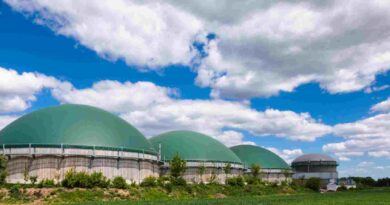
Biogas is another promising pathway to make gensets part of the green transition. Produced from organic waste, it produces much lower carbon emissions than fossil fuels, and its particulate matter is also negligible. Decentralised biogas plants can supply reliable, localised fuel for backup power, especially in agro-based industries and semi-urban areas. Biogas also aligns well with India’s waste management and rural economy goals, creating value from waste while reducing dependence on imported fossil fuels.
Shifting from diesel to natural gas or biogas run gensets will deliver quick gains and leverage in India’s decarbonisation strategy. The necessary technology and fuel are already available. All we need is to take conscious actions that would cut down industrial carbon emissions significantly. In the discussion of net-zero emissions, shifting the fuel alternative of gensets may seem like a small step, but this one step could deliver visible environmental gains within this decade itself. It is an opportunity that we must seize as soon as possible.