Central Govt rejects Karnataka claims of excess ethanol blending in petrol
The Petroleum Ministry has held that testing of 893 fuel samples collected from 27 States and Union Territories confirmed compliance with the prescribed BIS specifications.
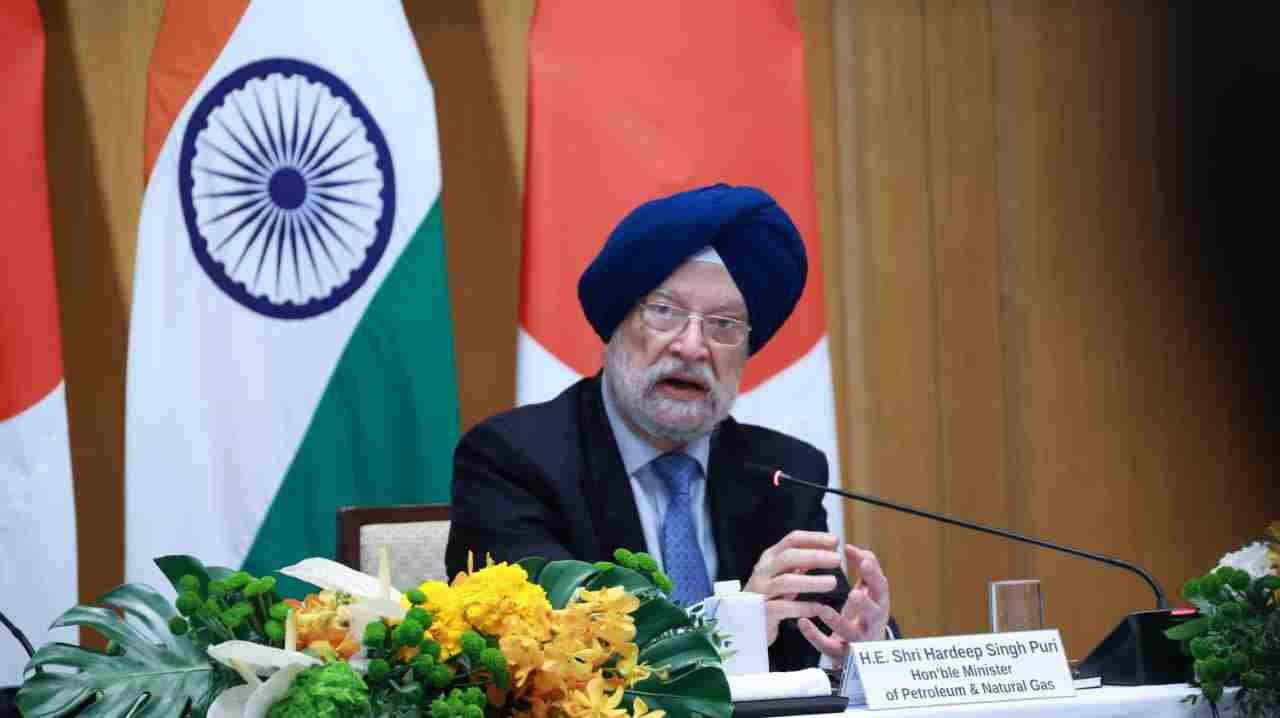
The Ministry of Petroleum and Natural Gas has rejected claims by the Karnataka Government regarding excessive ethanol content in petrol supplied at certain retail outlets in the state, stating that E20 petrol distributed by public sector oil marketing companies (OMCs) conforms to prescribed quality standards.
In an official clarification, the Ministry said that E20 petrol supplied by Indian Oil Corporation (IOCL), Bharat Petroleum Corporation (BPCL) and Hindustan Petroleum Corporation (HPCL) across the country, including Karnataka, complies with IS 17021, the Bureau of Indian Standards (BIS) specification for ethanol-blended motor gasoline.
The Ministry further stated that testing of 893 fuel samples collected from 27 States and Union Territories confirmed compliance with the prescribed specifications. Of these, 56 samples were collected from Karnataka, and all were found to meet the BIS standards. The ethanol content in these samples ranged between 19% and 20%, in line with the E20 fuel specification.
Earlier, the three public sector OMCs had also rejected the reported allegations, stating that the claims were not supported by tests conducted in accordance with established statutory and technical procedures.
Following the concerns raised by the Karnataka Government, the three oil companies have sought complete sampling documentation, outlet-wise laboratory reports and details of the testing methodology adopted for the reported findings. This, they said, would help assess the claims based on established technical procedures.
The Petroleum Ministry also highlighted that OMCs maintain established quality assurance mechanisms across their fuel supply and distribution networks. These systems are designed to ensure that ethanol-blended petrol meets applicable BIS specifications before being supplied to consumers.
Ethanol Blending Programme Delivers Wider Economic and Environmental Benefits
The Ministry said that India’s ethanol-blending journey spans more than two decades, beginning with the pilot programme in 2001 and progressing through successive policy interventions, including the National Policy on Biofuels, 2018, and the NITI Aayog Roadmap for Ethanol Blending in India by 2025, prepared in consultation with stakeholders.
The Ethanol Blended Petrol (EBP) Programme is an important component of India’s efforts to reduce dependence on imported crude oil, strengthen domestic agricultural value chains and advance energy security.
Ethanol blending programme, since ESY 2014-15, has resulted in:
- Foreign-exchange savings of more than Rs 1.97 lakh crore.
- Substitution of approximately 316 lakh metric tonnes of crude oil.
- Reduction of approximately 952 lakh metric tonnes of CO₂ emissions.
- Transfer of more than Rs 1.66 lakh crore to farmers.
Govt says that the outcomes underline the wider economic, environmental and agricultural benefits of the programme, which cannot be assessed solely through a selective comparison of OMC profitability and alleged consumer costs.