
I AM RENEW EXPOSÉ: A ‘loot in the making’ in Rs 128-crore Bhopal CBG tender
Common business links, questionable project credentials and unanswered complaints point to possible collusion between competing bidders in a Rs 128-crore municipal waste-to-CBG project. With Rs 64 crore in “government grant” at stake, questions are mounting over the role of Bhopal Municipal Corporation officials in the tender process.
On one hand, the Prime Minister launches 23,000+ crore GOBARdhan program to revolutionise biogas and bio-fertilizers program across the country, on the other, there are forces ready to sabotage the growing India story. The state of Madhya Pradesh has a ‘Double Engine’ government, but India’s bad standing in Corruption Perception Index explains that the coalition between bureaucracy and businesses can very well mar the prospects of an Atmanirbhar Bharat or Viksit Bharat.
A Rs 128-crore compressed biogas (CBG) project in Bhopal, intended to turn municipal wet waste into clean fuel, has come under serious scrutiny following allegations of collusion between competing bidders and possible irregularities in the tendering process.
An investigation by I Am Renew has uncovered several connections between two bidding consortiums, including common business associates, financial transactions and overlapping corporate relationships. Documents and other evidence also raise questions about whether the companies have met the technical eligibility requirements prescribed in the tender.
More importantly, the alleged irregularities have raised questions about the role of senior officials of Bhopal Municipal Corporation (BMC), which is responsible for conducting the tender process.
The project has an estimated cost of Rs 128 crore and involves a “government grant of Rs 64 crore.” The large public funding component makes the transparency of the bidding process particularly important.
Central Government Intervention
Given the seriousness of the matter, the Ministry of Urban Development of the Government of India has also intervened. In its letter dated November 20, 2026, the Ministry has directed the Government of Madhya Pradesh to conduct a careful investigation into the matter and keep the Centre informed.
Rs 128-Crore CBG Project
The Bhopal Municipal Corporation has invited bids for the selection of a concessionaire to design, build, finance, operate and transfer (DBFOT) a 400-tonne-per-day (TPD) municipal solid waste processing facility for producing compressed biogas.
The project will be developed under the Public-Private Partnership (PPP) model, with an estimated investment of Rs 128 crore.
Its scope includes:
- Processing 400 TPD of municipal wet waste to produce CBG.
- Construction of digesters and associated processing infrastructure.
- Installation of weighbridges, leachate treatment systems and utilities.
- Production and handling of CBG and management of process residues.
- Operation and maintenance of the facility in accordance with applicable waste-management and environmental regulations.
The project also carries a proposed government grant of Rs 64 crore, equivalent to half of its estimated cost. This substantial financial support makes the selection of a technically qualified and financially capable concessionaire critical.
The Request for Proposal (RFP) clearly lays down conditions to prevent conflicts of interest among bidders. According to the tender document, a bidder, including its consortium members and associates, cannot:
- Have common controlling shareholders or directors with another bidder.
- Hold more than 5% equity in another competing bidder.
- Share an advisor or consultant with another bidder in a manner that provides access to confidential competing bid information.
- Have been engaged by the authority to prepare or advise on the project, subject to the exemption specified in the RFP for engagements that ended more than six months before the bid submission deadline.
These conditions are intended to ensure independent competition and prevent companies from coordinating their bids.
However, documents examined by I Am Renew have raised questions about whether two consortiums participating in the Bhopal tender have maintained the independence required under these conditions.
- Two Competing Consortiums, Multiple Business Connections
The investigation has identified two consortiums participating in the tender.
Consortium 1:
- Soham Impex (India) Pvt Ltd – 70%
- Chem-Process Systems Pvt Ltd – 30%
Consortium 2:
- Nilesh Engineers – 65%
- Uzzala Bio Energy Solutions – 35%
Although these companies have submitted separate bids, their corporate and financial records indicate several business connections.
One important link involves Jigneshkumar Methaniya, who is identified in corporate records as a designated partner of Geotech Energy LLP, a director and lender of Chem-Process Systems, and also associated with Uzzala Bio Energy Solutions as a director.
The connections do not end there. Uzzala Bio Energy Solutions’ audited financial statements reportedly show that Chem-Process Systems owed it Rs 4.95 crore as of March 2024. The outstanding amount was Rs 9.35 crore a year earlier.
Further, the FY2023-24 accounts of Nilesh Engineers identify Soham Impex as one of its customers. These financial and corporate relationships raise important questions about the independence of the two competing consortiums and whether their participation complies with the conflict-of-interest provisions of the RFP.
Another unusual detail concerns the “purchase of stamp papers” for affidavit submissions. Records examined by I Am Renew indicate that both bidders purchased two stamp papers each from the same vendor in Ahmedabad within a gap of just four minutes.
Individually, these connections may not establish collusion. However, taken together, they warrant a detailed examination by the tendering authority and independent investigating agencies.
Questionable Technical Credentials: Do the Reference Plants Meet the Requirements?
The technical eligibility of both consortiums is another major area of concern.
The BMC tender requires bidders to demonstrate experience in developing at least one 200-TPD plant, two plants of 120 TPD each, or three plants of 100 TPD each. Additionally, at least one qualifying plant must have operated continuously for 365 days, supported by certification from the client or owner.
However, documents and satellite images examined by this publication raise questions about the reference projects submitted by both consortiums.
Soham Impex’s 220-TPD Reference Plant
Soham Impex has reportedly submitted a 220-TPD plant developed by its consortium partner Chem-Process Systems for Geotech Energy LLP. A certificate issued by Geotech Energy on Chem-Process letterhead states that the plant was completed and operationalised in July 2025.
However, satellite images reviewed by I Am Renew appear to present a different picture.
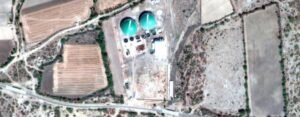
- March 2025: The site appears to have been at an early construction stage, with concrete digester walls and boundary structures visible. No major processing infrastructure or sheds are apparent.
- December 2025: The images show little visible progress, with the site still appearing largely incomplete.
- January 2026: The images continue to raise questions about the project’s development and operational readiness.
- March 2026: Gas holders appear over the digesters for the first time in the images examined.
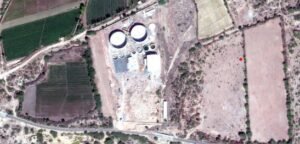
These observations raise questions about how the plant could have been operational since July 2025 and whether it completed 365 consecutive days of operation as required by the BMC tender. There is not found documentary evidence, such as GST invoices or sales records, establishing CBG sales from the plant over the required operating period.
Nilesh Engineers’ 250-TPD Ambala Reference Plant
The second consortium, led by Nilesh Engineers, has submitted a 250-TPD plant at Ambala as its reference project. According to the submission, the facility was developed by Uzzala Bio Energy Solutions for Chem Energy and has been operating since July 2024. However, information published by one of the technology suppliers describes the plant as having a capacity of 105 TPD, with commissioning beginning in March 2025. CARE Ratings, meanwhile, has reported that Chem Energy began operations in June 2025.
These differences raise questions about the actual capacity, commissioning date and operating history of the reference plant submitted to BMC.
BMC’s Overlooking Collusion?
The connections between the bidders and questions over their technical credentials have already been brought to the attention of Bhopal Municipal Corporation. According to information available with I Am Renew, formal complaint has been submitted to the Bhopal Municipal Commissioner in October, alleging same very irregularities in the formation and participation of the consortiums.
One source held, “but it has been about a month and no reasonable investigation and action has come up from Bhopal civic body officials. This adds to the very likelihood that the two consortiums are in active collaboration with the top officials of BMC obligated with the tendering process. Afterall, there is public grant of Rs 64 crores that these companies eye with government officials.”
Another source held, “The bids should not have been accepted at the first go. Since, BMC has accepted the papers, it means there is active collaboration between the said companies and civic body officials.”
One source said, “These companies have also fraudulently entered the tendering process in Ujjain as well to develop a CBG project. In that one of these companies has been ranked highest by the Ujjain civic body officials. It seems corruption has taken place in Ujjain too.” He said that with Rs 64 crore in government grant money involved, these are not minor procedural questions for BMC.