GOBARdhan 2.0: Can India turn waste into a new energy revolution?
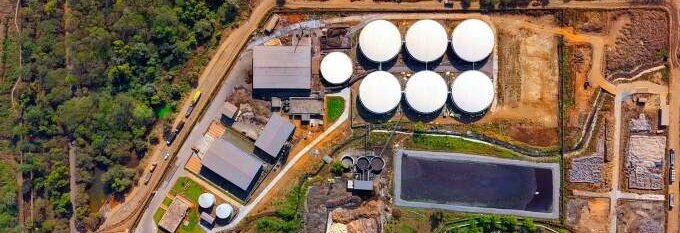
India’s clean-energy story is entering a new chapter—one that begins not in sprawling solar parks or wind farms, but in farms, cattle sheds, municipal waste yards and sugar mills.
The Central Government has approved GOBARdhan Scheme, with a massive outlay of Rs 23,731 crore. The decade-long initiative seeks to turn some of India’s most abundant waste resources—including agricultural residues, cattle dung, press mud, municipal organic waste and other biomass—into clean fuel, organic manure, additional rural income and economic value.
At the heart of the scheme is Compressed Biogas (CBG), which the government sees as an increasingly important component of India’s future energy mix. The ambition is considerable – to provide the sector with assured demand, stable and remunerative pricing, capital assistance, pipeline infrastructure, credit support and technological development.
For the CBG industry that has spent years trying to build a market, the announcement has generated considerable optimism. Earlier initiatives under the National Bioenergy Programme helped establish more than 200 CBG plants across the country. GOBARdhan now seeks to take the sector several steps further, with an objective of increasing domestic CBG production nearly ten-fold.
The scale of the ambition, however, also brings the sector’s practical challenges into sharper focus. Industry stakeholders therefore see GOBARdhan as both an opportunity and a test. Greater policy certainty and financial support could unlock investment and encourage entrepreneurs to enter a sector that has often struggled with long gestation periods and uncertain economics.
At the same time, questions around implementation, pricing, logistics and feedstock availability cannot be ignored.
Higher Offtake Price Would Create ‘The Pull’
 SN Yadav, Executive Director (CBG), GAIL India Ltd. believes that the increase in offtake price would prove to be a shot in the arm for biogas industry. He said, “Gobardhan provides better renumeration to CBG producers. The offtake price would now be Rs 2,110 MMBTU earlier it was Rs 1,478 MMBTU. The increase is almost 1.5 times and the return is better for CBG plants.”
He says that now the target is to realise 5 million standard cubic metres per day (mmscmd) CBG through 400 plants and he believes that these plants will be realised much before one decade, which the Gobardhan Scheme has been planned for.
With regards to GAIL’s commitment towards biogas, SN Yadav further informed, “One plant was commissioned in Ranchi and one more is also commissioned in joint venture (JV) – Leafniti Bioenergy – in Bagalkot, Karnataka. We also have six plants under construction currently – one in Sultanpur (UP), one in Bengaluru, two in Chhattisgarh and two in Punjab.”
Finance is another critical factor and the industry has witnessed several CBG projects struggling or failing because of their inability to service bank loans. The Indian Renewable Energy Development Agency (IREDA), a specialised institution providing financial support to renewable energy projects, is playing an increasingly important role also in financing and promoting the bioenergy sector.
Raising Bankability But Entrepreneurs Must Watch-Out
 Sujith Surendran, GM/Projects, IREDA, believes that Gobardhan is going to be a big boost for the CBG sector. He says that that IREDA was not getting the Debt Service Coverage Ratio (DSCR) – that is the bankability evaluation – for the CBG plants with the then availing pricing of CBG. Gobardhan has increased the biogas prices. IREDA would earlier get 1.3 DSCR, which would now go to 1.5 and the new policy would definitely help with the bankability of the projects.
Surendran apprised, “In addition, they are giving capital subsidy also, that again will help the promoters and the bankers to ease the debt burden. Now the infrastructure part is also covered in Gobardhan Scheme (pipelines development), catering to that challenge also. For the raw material sourcing, the FPOs are mentioned in the policy and the feedstock is important part in CBG projects.”
Asked what young entrepreneurs should keep in mind when entering the CBG sector, Surendran said, “Once you have infrastructure, you get long-term offtake with GAIL or oil marketing companies. First, you have to see how you sell your finished products. Second, you may not be an expert with technology. So, your technology partner should have sufficient experience to take the project correct technical way and not mislead you. Make sure you extend secured advances to EPC partner. In biogas industry most of the advances are unsecured, which is one of the biggest challenges in this sector. Third, feed stock assessment is must for its availability for 10 years and on what pricing.”
IREDA has already given Rs one lakh crore in loans to the renewable energy sector. Out of this, Rs 12,000 crore (12%) are given to the bioenergy sector as a whole. The travesty is that the CBG sector has received around Rs 750 crores from IREDA which makes it less than 1%. Now with Gobardhan in place, the finances are expected to rise giving a new boost to the sector.
Policy Peek Beyond Gas, Into Bio-Fertilizers
Vijay Nirani, Managing Director, TruAlt Bioenergy Ltd. calls the scheme ‘fantastic and very deeply thought through’ – for it offers greater offtake price fixed for 10 years, capex support, CGD Synchronisation viability gap funding and much more.
 Vijay finds an important missing link that can’t be ignored by the policy makers – ‘no promotion to the fertilizers.’ He said, “we have made representations to fertilizer ministries and to different ministries that fertilizers can be thought through because India imports huge amount of fertilizers. Our objective is to be at least be self-reliant on our demand?”
He says that DAP and urea in India are heavily subsidised, and the same subsidy should be extended to domestically produced organic fertilisers. Any savings from replacing imported chemical fertilisers should instead be given to subsidise indigenous bio-fertilizer producers.
“We (TruAlt) had to develop our market for biofertilizers (manure & liquid) in our region. That’s why we are net positive and making good returns in the CBG business. But everybody is unable to do it, and we may not be able to do it if the awareness is not created. We only ask the government on this special thing that you have already created a good avenue; now if you are only focusing on gas, the gas will not come unless the residual waste is also enabled. Just pass the same benefits that you’re giving to the urea and DAP to the organic fertilizer,” said Vijay. He emphasised that it’s good for of the soil, good for the consumer health, good or the economy and everybody would benefit from it.