Ethanol is made from ‘surplus’ food stocks, Food vs Fuel debate is baseless – Vijendra Singh, AIDA President
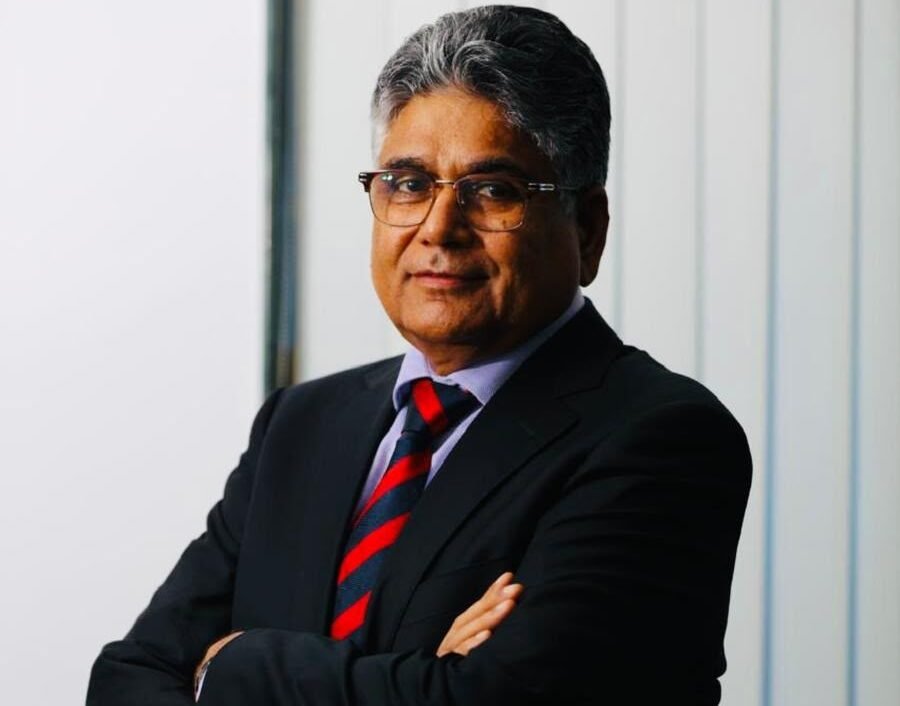
The Ethanol story is not just a success story in the country today – it’s equally marred by controversies – and amidst all this, Subhash Chandra Yadav of I Am Renew speaks with Vijendra Singh, President, All India Distillers’ Association (AIDA), on the sidelines of Green Energy Seminar-2026. Vijendra Singh discussed AIDA’s role in policy advocacy, ethanol’s contribution to farmers and energy security, water-use concerns, E85 and flex-fuel vehicles, feedstock diversification, market stability and association’s plans to expand biofuels into biogas. Excerpts:
1. How do you see AIDA evolving in developing the biofuels market?
Vijendra Singh: AIDA is an association of distillery producers. Those who are involved in production are our members. The role of AIDA is to support the policy framework and act as a bridge between the government and producers.
We do policy advocacy and make sure that the interests of all stakeholders are taken into consideration. Our stakeholders include producers, the DCO channel and the end consumer. We keep the interests of all these stakeholders in mind while advising the government on policy matters. We also take the help of the media to put forward our voice and communicate our views.
2. How do you look at AIDA’s successes and failures over the years?
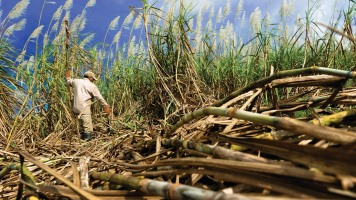
Vijendra Singh: See, when we started working seriously in 2018, our basic objective was to find a productive use for whatever excess products were available in the country and had no outlet—whether they could not be exported or there was no demand from consumers. There was surplus sugarcane, rice and maize. We wanted to create value from these surplus products. We discussed the issue with the government, and it became clear that one of the best outlets for these surplus agricultural products was to convert them into ethanol.
One major advantage of this was that the payment to farmers, which was around Rs 20,000 crore in 2018, increased significantly, and a strong economic ecosystem developed around ethanol.
Then the question came up: once all the excess sugar is consumed, what next? That is when the government brought in policies promoting corn-based ethanol as well. We also said that the industry should move towards multiple feedstocks and multiple products. If we depend on just one product, there may be times when the commodity is available for ethanol production and times when it is not.
3. How did the government support in production process?
The government also had a large quantity of rice lying in FCI storage, which had very limited use. The government had to pay interest and storage costs, and there was also the risk of the grain deteriorating during storage. So, the government eventually allowed this surplus grain to be utilised as well. The idea was simple: whatever excess product is available in the country, and whatever is creating stress for farmers and the government, should be put to productive use. Ethanol provided that opportunity.
The benefit of ethanol is also very clear from an energy-security perspective. Every litre of ethanol that we use effectively reduces the requirement for an equivalent amount of imported oil. The achievement of the ethanol programme is that today installed capacity has come close to 2,000 crore litres.
The government has already brought flex-fuel vehicles into the market. If their popularity increases, ethanol demand will also increase—and the industry is capable of supplying that demand.
4. From environmental perspective, it was brough in public debate that argued that ethanol requires around 10,000 litres of water for every litre of ethanol produced. Could you shed some light on this?
Vijendra Singh: There is no truth in that. It’s completely incorrect. We need to look at this issue in two parts. One is the water consumed by the farmer on the farm—whether it is for growing sugarcane, corn, rice, or any other crop. That is something the farmer controls, and the factory has no control over it. The second part is the water consumed inside the factory. For the raw material that we receive and process in our factories, good and efficient plants consume around two litres of water for producing one litre of ethanol. It is only about two litres per litre of ethanol.
Ethanol is good for everyone. It is good for the environment, good for farmers, good for the country, good for the economy, and good for the consumer.
5. Do you suspect any inter industrial rivalry behind such nuisance?
Vijendra Singh: The problem is that these things are mainly being used to fool consumers and gain political advantage. No one from the industry would create such a nuisance because the market is already very large. As far as creating awareness is concerned, AIDA is continuously engaging with people through social media. Every week, we share our views and educate consumers through social media about why ethanol is better, what needs to be done, and how it benefits both consumers and farmers.
Every consumer should understand what benefit the ethanol programme is bringing to them. If this programme did not exist, petrol would not be available at Rs105 a litre. And when people say the country is running out of petrol or gas, we can also offer ethanol as an alternative for cooking.
6. What more does AIDA expects from the government in terms of policy support?
Vijendra Singh: The government has already given us the policy framework, but greater focus should now be placed on the E-85 policy, which can be a major game changer. From our association’s side, we want more work and focus on flex-fuel vehicles, along with greater awareness among consumers. There are also some technical aspects to address, particularly ensuring that both the vehicles and the required fuel are available at stations.
7. Has the country begun to bear the burnt of ethanol policy with sugar and maize shortages?
Vijendra Singh: There are two things that are very clear. Ethanol is produced from excess commodities—whether sugar, corn or rice. If there is any shortage, that commodity will not be diverted for ethanol. That is the policy, so there is no need to worry. If we look at sugar availability, around 22 lakh tonnes of sugar is supplied every month in the country. The recent rise in sugar prices was largely driven by speculation. Once the government took corrective measures, prices started coming down. So, this was a spontaneous market event, not a supply-chain issue.
8. What is AIDA’s plan going forward to further strengthen the biofuels industry?
Vijendra Singh: We are expanding our vision. We are talking about biogas and also about how to promote flex-fuel vehicles. Oil marketing companies, policymakers and other stakeholders need to take this forward so that we can increase income within the country and reduce our dependence on petrol imports.