The Heat Beneath Ladakh: ONGC’s Second Puga Well Revives India’s Oldest Clean Energy Promise
 Geothermal Energy
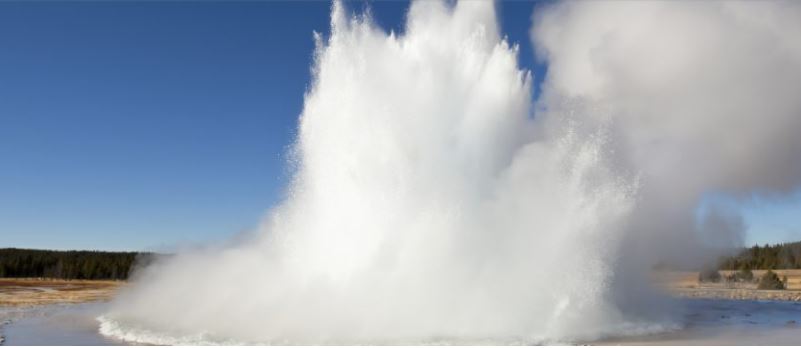
Geothermal is the renewable India talks about least and has known about longest. The Geological Survey of India mapped the country’s hot spring provinces decades ago, identifying over 300 thermally active sites and a theoretical potential often cited at 10,000 MW. Puga Valley in eastern Ladakh has always topped that list — a stretch of the Indus suture zone where the earth’s crust is thin enough that steam and boiling water vent naturally at the surface. Yet while India built the world’s third-largest solar fleet, its commercial geothermal capacity has remained precisely zero, defeated by drilling costs, technical complexity and the remoteness of its best resources.
That is what makes ONGC Energy Centre’s quiet progress worth attention. The company’s first Puga well proved the resource, producing steam above the boiling point of water. The second well, just completed, reached its 1,000-metre target depth in about a month — faster and cheaper than the first campaign, according to the company. In drilling, repeatability is the whole game: a second well that comes in quicker and at lower cost is evidence of a learning curve, and learning curves are how impossible energy sources become ordinary ones. The next phase is a 1 MWe pilot plant, with the stated long-term objective of geothermal supplying reliable baseload electricity to Ladakh.
The societal logic is compelling in a way the megawatt count obscures. Ladakh is among India’s most energy-precarious regions: a cold desert where winter temperatures plunge far below freezing, road access closes for months, and diesel — hauled over high passes or flown in — underwrites heating, power backup and much of daily life. Solar works beautifully in Ladakh’s abundant sunshine but fades exactly when the need peaks: on winter nights. Geothermal inverts that weakness. It runs every hour of every day, unbothered by weather, and its by-product — hot water — is itself a resource for space heating, greenhouses that could extend the region’s razor-thin growing season, and aquaculture. For high-altitude communities, geothermal is not just electricity; it is winter resilience.
There is also an ecological argument for treading carefully, and it deserves honest weight. Puga sits in a fragile high-altitude ecosystem near wetlands that host migratory birds, in a region where pastoralist communities hold grazing rights. An earlier drilling campaign in the valley drew criticism after uncontrolled discharge from a well; any scale-up must demonstrate that reinjection, water handling and land discipline are solved problems, not afterthoughts. The technology’s global record — from Iceland to Kenya’s Rift Valley, where geothermal now anchors the grid — shows this is achievable, but it requires a rigour that pilot projects must build in from day one.
The wider signal is about who is doing the drilling. ONGC — an oil and gas company — is precisely the kind of enterprise geothermal needs: subsurface expertise, drilling fleets, and reservoir engineers whose skills transfer almost directly. Around the world, the geothermal revival is being led by petroleum companies repurposing their core competence for the energy transition. If Puga’s pilot works, it would hand India’s hydrocarbon establishment a credible second act — and hand Ladakh something rarer still: clean power that doesn’t stop when the sun goes down or the passes snow shut.