NAN Silox GreenMet to develop Rs 1,400-crore battery recycling plant in Andhra Pradesh
At full capacity, the plant will handle 40,000 tonnes per annum (TPA) of battery shredding and 20,000 TPA of hydrometallurgical processing.
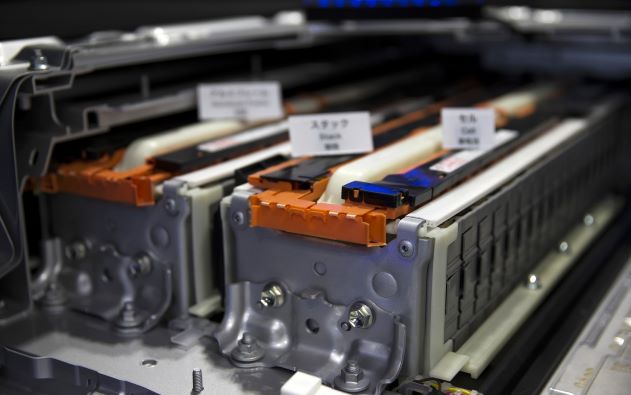 EV batteries driving up demand of Cobalt, Nickle & Lithium
NAN Silox GreenMet, a joint venture with equal share holding between NAN GreenMet and Belgium-based Silox Group, is moving ahead with its Rs 1,400-crore lithium-ion battery recycling and critical metals recovery facility at Naidupeta in Andhra Pradesh after receiving Consent to Establish (CTE).
The company is preparing to begin construction of the facility, which will be developed in phases. At full capacity, the plant will handle 40,000 tonnes per annum (TPA) of battery shredding and 20,000 TPA of hydrometallurgical processing.
The project aims to strengthen India’s domestic battery recycling ecosystem and improve access to critical metals required for battery manufacturing.
Vijay Pasupathy is New CEO
NAN Silox GreenMet has appointed Vijay Pasupathy as chief executive officer to oversee the execution of the Naidupeta project and lead the company’s planned expansion into engineered cathode materials. Pasupathy previously served as executive vice-president at Epsilon Advanced Materials.
“Our expertise in high-purity metal extraction will be central as we build out the Naidupeta facility and advance discussions on pCAM and CAM technology partnerships,” said Jean-Christophe Bogaert, Chairman, Silox Group.
Beyond the initial investment of Rs 1,400 crore, the company has earmarked additional capital for downstream manufacturing of precursor cathode active materials (pCAM) and cathode active materials (CAM). It is also exploring global technology partnerships to support the proposed expansion.
According to the company, the facility’s hydrometallurgical process will recover critical metals and produce high-purity, battery-grade salts. These materials will serve as feedstock for the subsequent production of pCAM and CAM, which are essential components of lithium-ion battery cells.
India is expanding its battery cell manufacturing capacity but remains dependent on overseas supply chains for processed cathode materials. Integrating battery recycling with cathode material production could help establish a domestic supply chain that converts recovered metals into materials suitable for battery manufacturing, reducing reliance on imports, particularly from East Asian suppliers.
The project is expected to support the recovery and reuse of valuable materials from spent batteries while advancing India’s efforts to develop a circular economy for critical minerals.
Silox Group specialises in hydrometallurgical technologies for extracting and refining valuable metals from secondary resources, with a focus on sustainability and circular economy solutions.
India Struggles with Recovery
India currently recycles only around 1% to 3% of end-of-life lithium-ion batteries through formal, registered channels, while most are handled by the informal sector, stored for future use or exported. However, the domestic battery recycling market is projected to grow significantly, rising from an estimated $37.4 million in 2026 to $138 million by 2031, according to MarketsandMarkets.