From sugar crystals to ‘green gold’ – How Chemical Systems Technologies is rethinking the sugar industry
From India’s first sugar refinery to liquid sugar, one-step refining and extracting 'green gold' lignin from bagasse, Sunil Singhal has challenged conventional sugar processing. His innovations aim to cut energy use, unlock new revenue streams from waste and extend sugarcane’s value from factories to village homes through eco-friendly bricks.
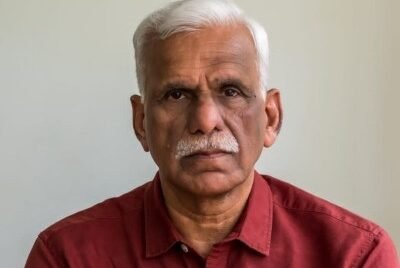
For decades, sugar processing in India followed a familiar path – sugarcane went into a mill, sugar came out as crystals and the remaining bagasse was largely burned for energy. Amidst this, Sunil Singhal, Chairman of Chemical Systems Technologies, that he founded in 1986, and an IIT Kanpur alumnus, has spent much of his career asking a different question that what else can be extracted, saved or created from the same process? He emerged as a key figure in the Indian sugar industry disrupting the processes for greater good for all stakeholders.
Pioneered Refined Sugar
Chemical Systems Technologies pioneered sugar refining technology in India and helped set up the country’s first sugar refinery in 1999. What began with improving sugar quality has gradually expanded into reducing energy consumption, developing new processing technologies and finding higher-value uses for sugar industry byproducts.
“At a point of time, people had many questions that whether it will work, not work. But we were persistent, and we followed the rhythm. And now we have 75 sugar refineries in India and across the world in Cambodia, Vietnam, Saudi Arabia, Canada etc.”

India’s First Liquid Sugar Plant
One of Singhal’s recent initiatives is the development of India’s first liquid sugar plant, set up in Yamuna Nagar, Haryana.
The idea came from looking closely at how sugar is actually consumed. Singhal points out that most of India’s sugar is not consumed directly by households but by industries that dissolve the crystals before using them in their products. “About 75 to 80% of India’s sugar consumption is in the industrial side; used by companies like Pepsi, Haldiram etc. And they all dissolve the sugar before they use it,” said Singhal.
This creates a curious cycle. Sugar factories first convert liquid into crystals. Industrial customers then buy those crystals and dissolve them again.
Chemical Systems Technologies is therefore promoting liquid sugar, which can be transported in tankers and stored directly in tanks at industrial facilities. For manufacturers, this can reduce handling, time, cost and hygiene-related challenges.
Adoption, however, remains gradual. Singhal said Coca-Cola is interested in sourcing liquid sugar from another Indian sugar factory and supplying it directly to its plant. Liquid sugar itself is not new globally. The innovation, Singhal apprised, is bringing the model to India.
One Step Refined Sugar
The company is also working to change the conventional process of making refined sugar. Traditionally, refining involves first producing raw sugar and then refining it. Chemical Systems Technologies has developed what Singhal describes as a one-step process for producing refined sugar.
Pilot-scale work has already been carried out at four sugar factories, with commercial adoption expected in the coming years. The biggest attraction is energy savings.
“To explain how it’s different, I’ll give you one measure. Steam consumption in our sugar factories is about 36-37%. We will achieve the same result in less than 24%. That means it’s a reduction of almost 45% in steam consumption. So that will be a huge cost factor, which will be incentive for the sugar mills to reduce the cost of production,” said the Chairman.
For an industry where energy costs directly affect the economics of production, such a reduction could make the technology attractive to sugar mills.

Extracting Lignin for The World
Singhal’s more ambitious work is now taking place beyond sugar itself, in the structure of bagasse. Bagasse, like other biomass, contains cellulose, hemicellulose and lignin. Lignin acts as the structural material that binds the other components and gives plants their strength. Its complex structure, however, makes it difficult to extract and process.
Chemical Systems Technologies has developed technology to extract lignin from bagasse. The company has moved from laboratory work to a pilot plant, with plans for a larger-scale facility.
“We’ve been able to do it at the lab scale, and now we have put up a pilot plant, and eventually we will go to a full-scale plant. Lignin will be ‘the’ raw material for the future. It’s going to be a green gold.”
The potential applications are wide. Lignin-derived materials could replace some fossil- and crude-based chemicals and find applications in personal care and cosmetics. Singhal also points to potential uses in lithium-ion battery electrodes and concrete, where lignin can help improve setting and reduce water consumption.
For Singhal, this is where the future value of biomass lies—not simply in burning it, but in extracting materials that can replace conventional fossil-based products.
Valorising Bagasse
The same philosophy extends to other components of bagasse. Chemical Systems Technologies is working on extracting microcrystalline cellulose, which is widely used in pharmaceutical tablets. Cellulose can also serve as a raw material for rayon, offering a natural alternative to synthetic fibres.
Another product is silica, which has applications in tyres and pharmaceuticals. The company sees these products as examples of how a material currently used largely as fuel can become a source of additional revenue for sugar mills.
Today, much of the bagasse generated after sugar extraction is burned to produce power. Singhal believes that extracting higher-value products can change the economics.
Lignin, for instance, can command a much higher value than raw bagasse. The proposition is straightforward: instead of selling or burning a low-value byproduct, sugar mills can create multiple revenue streams from it.
Sugarcane Bricks
The final piece of Singhal’s approach takes the idea of bagasse utilisation from factories to villages. After all, he too is a human being!
Chemical Systems Technologies has commercialised sugarcane-based brick blocks, based on research carried out by the University of East London. A prototype showroom has been created in Noida.
Singhal sees the blocks primarily as a way for sugar mills to create a local social-impact model. “I must say that this is not a money-making idea. This is for social impact. The sugar mills should give their bagasse to the women cooperatives or self-help groups in the villages near every sugar factory who would make these brick-blocks and earn money,” said Singhal.
The company has designed a simple machine that can allow local communities to manufacture the blocks themselves.
 “We have designed a simple machine now to make these blocks, and then those can be used by the communities in their own houses. To give these blocks strength we use a binder, which too is a natural product. The basic idea is that a sugar factory should give help to the villagers around them.”
The blocks offer insulation benefits, are lighter than conventional materials and do not require cement. For hot regions, their insulation properties could help keep houses cooler, while in colder areas they can help retain warmth.
For Singhal, these innovations point to a larger transformation in the sugar industry. The future sugar factory may not simply produce sugar and burn bagasse. It could produce sugar, materials, chemicals, energy and building products—turning what was once considered waste into a portfolio of valuable resources.
And that, perhaps, is the larger idea behind Chemical Systems Technologies’ journey – extract more value from every tonne of sugarcane, while using less energy and creating new revenue streams for the industry.