AIDA, IIT-Delhi offer roadmap for ‘Flex-Fuel Vehicles’
The white paper, titled ‘Flex-Fuel Vehicles: Enabling Energy Security and Sustainable Mobility in India,’ was released at the AIDA Green Energy Seminar 2026.
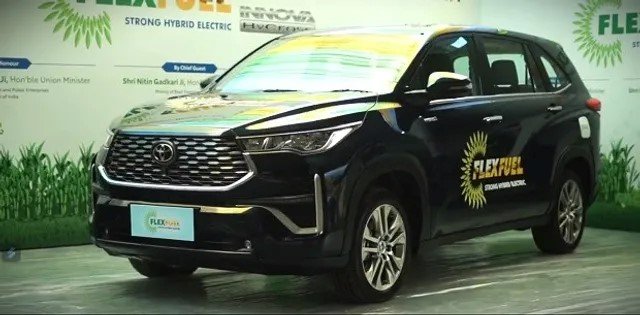
The All India Distillers’ Association (AIDA) and the Indian Institute of Technology Delhi (IIT Delhi) have unveiled a strategic roadmap for expanding Flex-Fuel Vehicles (FFVs) across India’s road transport sector, with a focus on the next phase of ethanol adoption following the nationwide rollout of E20 fuel. The initiative has come at a time when the ethanol blending program of the Modi government has landed in some intense controversies.
The white paper, titled ‘Flex-Fuel Vehicles: Enabling Energy Security and Sustainable Mobility in India,’ was released at the AIDA Green Energy Seminar 2026. It highlights vehicle manufacturing readiness, fuel distribution infrastructure and economic viability as key priorities for scaling FFVs.
With E20 now established as the national fuel baseline, the study argues that the focus must shift from ethanol production capacity to developing vehicles and supporting infrastructure capable of efficiently using higher ethanol blends at scale.
The IIT Delhi study proposes a ten-point policy framework covering multi-fuel engine technology, fuel pricing parity, fuelling infrastructure, sustainable feedstock availability, consumer adoption, vehicle financing and long-term market development. It positions FFVs as an important tool for reducing India’s crude oil import dependence while increasing domestic ethanol consumption without disrupting mobility needs.
Alongside the vehicle roadmap, CRID India released a study titled “Towards a Sustainable Bioenergy Future for India: Feedstock Security, Land-Water Balance and The Path Beyond E20.” The report examines the relationship between agricultural production, food security and ethanol demand.
According to the study, land attributable to ethanol production was around 3.46 million hectares in 2023–24, equivalent to approximately 1.58% of India’s gross cropped area.
Together, the studies provide policy and supply-side perspectives for government agencies, automakers and oil marketing companies as India considers ethanol blending levels beyond E20.