TruAlt Bioenergy meets 6-7% of India’s ethanol demand, looking at SAF & next-gen bio-molecules – Vijay Nirani, Managing Director
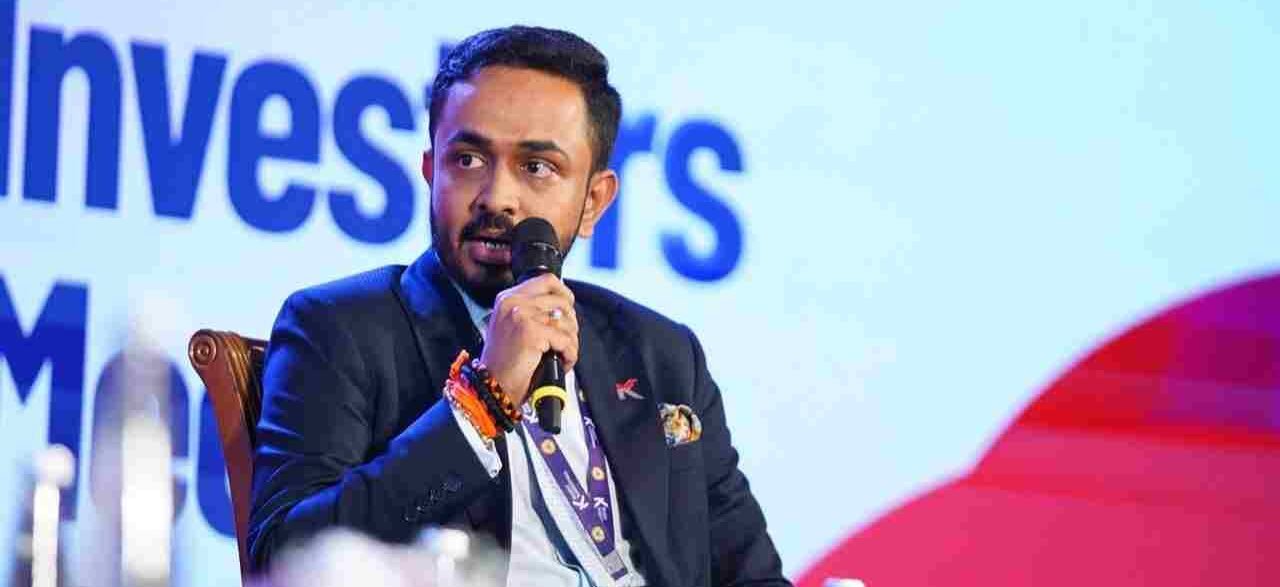
The bioenergy sector of India is taking a historic leap today and the baton is in the hands of young and talented. On the sidelines of ‘The Indian Sugar & Bioenergy Conference’ organised by ISMA in New Delhi, Subhash Chandra Yadav from I Am Renew had a conversation with Vijay Nirani, Managing Director, TruAlt Bioenergy Ltd. – one of the most successful ventures in country’s biofuels space. Nirani delved into the current standing of the bioenergy sector – growth, controversies and potentials. He also went in depth about TruAlt’s journey in ethanol and CBG, grasping opportunities in SAF, and future prospects in green molecules.
1. How do you see the journey of India’s bioenergy sector at this juncture?
Vijay Nirani: India, by and large, always had the potential to be one of the largest in the bioenergy space and that was proven in the implementation of the ethanol blending program (EBP) program that was targeted in 10 years but India achieved it in less than six years. That’s the potential that the country carries. Parallelly there was also a target to set up about 5,000 CBG plants, and somewhere the implementation of that wasn’t so successful as it was in the EBP program. Now the government has realized the concerns, and has come out with a very attractive policy called the Gobardhan that will give a lot of push to people who are within the sector and others to come and invest into the CBG space. Looking at the policy breakout, now the target to set up those 5,000 plants is definitely achievable in the next five years.
The next big opportunity would be the sustainable aviation fuel (SAF) as by next year (2027), blending of 1% would start and by 2030 the target is to go up to 5%. Now we are just three months away from that target, and there is no roadmap yet. It’s a big opportunity because we are closely pursuing about 2,000 crore liters ethanol capacity. For the sake of blending, we’re only producing about 1,200 crore liters. So, there is a decent 35-40% of the capacity still unused. Once the policy roadmap comes in, SAF is also an opportunity that India will realize not just for its consumption but for the global demand.

2. How has TruAlt evolved over years in the bioenergy sector?
Vijay Nirani: TruAlt is actually an offshoot of a parent entity – Nirani Sugar and Nirani Group – that runs many sugar plants. Now as a natural way ahead, we had set up TruAlt as a dedicated biofuel player, and we were lucky enough to be doing that ahead of someone else. We had first-movers advantage because our focus was to play in the entire value chain of biofuels, not just ethanol. Biofuels is a big transition that would impact every life. Also, we can substitute energy imports and produce indigenously. Our per capita power consumption is much lower than that of the developed countries. With the push towards industrialization and the race towards a $5-trillion economy, the per capita power consumption is going to rise. That gives TruAlt the confidence to scale up in all these energy businesses.
India is logically an agrarian economy with 45 to 50% of our population being into farming. We convert that agricultural residue or the agricultural produce into meaningful hydrocarbons. TruAlt’s first ethanol manufacturing complex was set-up in 2014 in sugar facility. TruAlt started ethanol making back in 2019. Since 2023, when TruAlt was put to operations, it took us just two years to be one of the largest ethanol players in the country, having scaled to contribute 6 to 7% of the demand for blending in India. So that was the first-mover’s advantage that we could scale up in terms of capacity. We are trying to replicate the same in CBG business as we have press mud, spent wash, DDGS etc as raw material. They’re low-hanging fruits.
3. You are primarily focused on the domestic renewable energy market. Do you have any plans to expand overseas?
Vijay Nirani: Not yet. There is a big opportunity within the country. In terms of population and our consumption patterns, India is probably six Europes put together. Once we exhaust that is when probably we will definitely look at going overseas.
4. The ethanol or bioenergy sector is marred by multiple controversies like engine failures, compatibility issues, food prices going up etc. How should the bioenergy industry as a body fight such challenges?
Vijay Nirani: There are three parts to this. One, whenever something new and groundbreaking happens, there is always heavy resistance. There is no logical or scientific basis for the pushback that we see in an age of social media. There is no meaning to giving response to any of these.
Second, every OEM/vehicle manufacturer has come out and said that their engines are prepared to control. Let me ask you, how many people have literally seen a blip in their engine? See, mileage would definitely go down because it’s a question of science; there is a calorific value difference between petrol and ethanol.
Now on the third part, about the price of agri-inputs going up. That’s the whole point. Why is there an EBP? We want the price of the agri-inputs to go up. We want the farmer to benefit. We are creating a huge circular economy. Consumption (in economy) will rise only when the lowest person in the pyramid has more money in his pocket. If 50% of the country are farmers, and their finished goods are getting double the price, he has to invest it or spend it somewhere. He’ll buy clothes, jewellery, airline tickets etc. and this consumption will lead us to a five trillion-dollar economy.
4. SAF is attracting a lot of attention these days. How far along is your SAF programme today?
Vijay Nirani: The jet SAF project is currently at our feed right now. So once the feed is done, we will be moving into the construction phase. We have currently identified Srikakulam as the plant location. It’s about 8-km away from Gopalpatnam port, about 120-km away from the IOC’s refinery in Visakhapatnam, about 110-km away from HPCL refinery and about 60-km away from the Bhogapuram international airport. The Andhra Pradesh government is very supportive. The (aviation) minister comes from the state and is very driven about it. We are awaiting the roadmap for the 1% blending from the Government of India as we are just three months away.

5. You are building some sizable Compressed Biogas (CBG) plants. Could you tell us something about your performance in this space?
Vijay Nirani: We have commissioned one plant in Karnataka in 2021 and we were one of the first companies to produce CBG. We have a JV with GAIL India Ltd called Leafniti. Now there are another three plants which are being commissioned. In the next two months we will be 70 TPD of capacity. Next, we have another six plants to begin construction with a clear timeline. With GAIL we would build a minimum of 10 plants but with the opportunity that we see, we probably could go as much larger. Our target is typically for 60 CBG plants.
6. CBG has been a challenging and uncertain business. What motivated you to enter this sector?
Vijay Nirani: The earlier CBG policy was not a fully thought-through program. Now you make CBG using multiple feedstocks. You use municipal solid waste, industrial waste, agri waste etc. Now the whole concept of new Gobardhan has taken through all of these ideas which makes it more lucrative. A lot of people or large companies are going through the learning curve. Once they learn it, then they will also have their foot to the accelerator, and there will be a lot more plants.
7. What other green molecules do you look to get into in the near future?
Vijay Nirani: It’s a phenomenal space and I’m just sharing my individual perspective, not of TruAlt. When we speak about the hydrocarbon value chain, there is a lot that we can do. We have already studied a simple thing called ‘Mevalonolactone Acid’ that can be used to make bio-rubber where everything is going to be sustainable. We have an integration in place, but have not decided to do capex. Currently, rubber comes from multiple sources. Lots of carbon is emitted in normal rubber processing. Most of the source of rubber is usually coming from the fossil-based industry.
There is green methanol that we can also do. We have carbon dioxide coming out of our methanol plants and CBG plants. So we capture that, it’s classified as bio-CO2 and with blending hydrogen into it, we can make multiple green molecules. The idea is to make them commercially viable. We are in just 2026 now, our target to be net zero is 2047. So, we have a long way to go, and there is huge potential in this space.