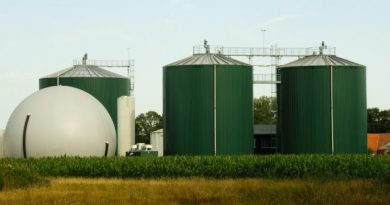
NDDB to build 15 biogas projects in six states
The planned biogas plants will require nearly 1,500 tonnes of dung daily, translating into payments of about Rs 15 lakh per day, or close to Rs 55 crore annually, to farmers.
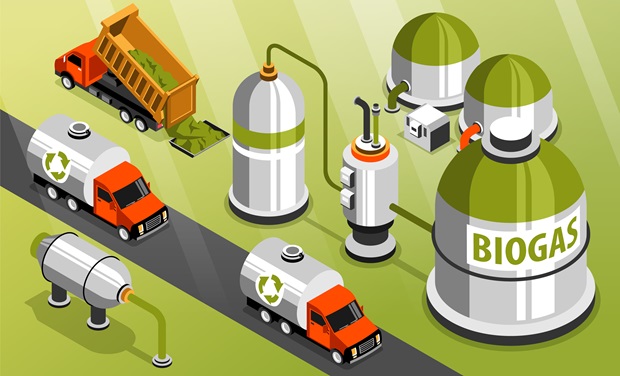 KIS Group will build 200 TPD biogas plants for Banas Dairy. Photo by-Macrovector/Freepik
Farmers in six states will soon be able to sell cow dung for Rs 1 per kg, a price fixed by the National Dairy Development Board (NDDB), to supply the feed to its compressed biogas plants. The initiative is part of a broader India-Japan collaboration to promote clean energy.
The state-run NDDB, which supports dairy cooperatives, is setting up 15 plants across Gujarat, Rajasthan, Odisha, Goa and Bihar. Supply chains are being built to procure animal waste directly from farmers. These plants will require nearly 1,500 tonnes of dung daily, translating into payments of about Rs 15 lakh per day, or close to Rs 55 crore annually, to farmers.
The clean energy partnership gained momentum during Prime Minister Narendra Modi’s recent visit to Tokyo, where Japanese firms committed $68 billion in investments in India, spanning renewable energy, mobility, semiconductors and AI. Suzuki Motor Corporation is a key partner in the biogas push, having tied up with NDDB through its subsidiary Suzuki R&D Center India. Suzuki has acquired a 26% equity stake in NDDB Mirda Ltd., which is company’s biogas arm with the option to raise it to 49%.
Compressed biogas is produced from animal waste through anaerobic decomposition and serves as a renewable fuel. NDDB’s plan is part of a larger ecosystem: both state-run and private players are expected to invest over ₹1,400 crore in bio-energy projects using farm residues and waste.
However, progress toward India’s 2018 target of 5,000 biogas plants by 2024 has been slow. Currently, just 114 biogas plants are operational against a planned output of 54 million cubic meters of gas daily.
Japan’s Sojitz Corporation, in partnership with Indian Oil, has also committed $395 million to build 30 biogas plants by 2026-27 under a new venture, IOC GPS Renewables Pvt. Ltd. Farmers will supply crop residues and agri-waste under contracts at assured prices.
The industry believes that converting crop stubble and other residues into biogas could reduce India’s air pollution and help cut fuel imports, which reached $13.3 billion in liquefied natural gas purchases in FY25.