IFGE commends Maharashtra CBG Policy-2026
A key feature of the policy is its integration of CBG production with municipal solid waste management by empowering Urban Local Bodies (ULBs).
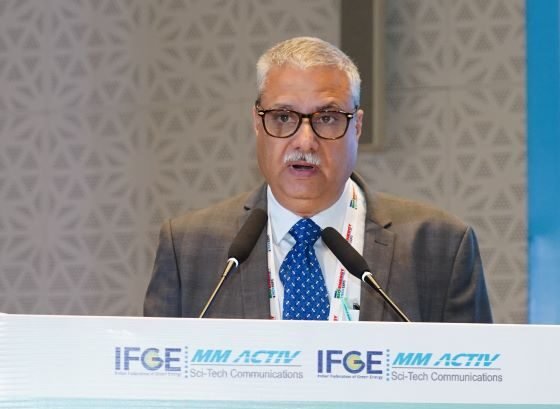 Sanjay Ganjoo, President, IFGE
The Indian Federation of Green Energy (IFGE) has praised Maharashtra’s Compressed Biogas (CBG) Policy 2026, calling it a progressive step toward strengthening the state’s role in India’s transition to waste-to-energy systems. The policy lays out a comprehensive framework to convert organic waste into clean energy while improving waste management, public health, and environmental sustainability.
A key feature of the policy is its integration of CBG production with municipal solid waste management. By empowering Urban Local Bodies (ULBs) to oversee waste segregation, collection, and processing, the initiative aims to reduce dependence on landfills and promote a circular economy. It also encourages the use of diverse feedstocks such as municipal waste, agricultural residues, livestock waste, and agro-industrial by-products. This approach not only ensures a steady supply of raw materials but also creates additional income opportunities for farmers and generates rural employment.
IFGE Director General Sanjay Ganjoo described the policy as a strong framework for scaling up the CBG sector, highlighting its focus on feedstock security and cluster-based development.
Similarly, Dilip Patil of the IFGE Sugar Bioenergy Forum believes that the policy would boost the bioenergy ecosystem, particularly in agriculture-driven and sugar-producing regions, by attracting investment and speeding up project implementation.
A Peek Into Policy
The Urban Development Department has been designated as the nodal agency for implementation. To improve project viability, the policy offers financial incentives, including viability gap funding of up to ₹75 lakh per tonne per day, with a maximum cap of ₹15 crore per project, and a total allocation of ₹500 crore for 2026–27. Additional benefits include a 2.5% SGST reimbursement and concessional land allocation through ULBs.
To streamline processes, the policy introduces a single-window clearance system and district-level facilitation cells. It also promotes public-private partnerships and competitive bidding for project development. Measures such as defined feedstock catchment areas, support for farmer organizations, and classification of CBG projects as priority infrastructure further strengthen implementation.
Overall, the policy aligns with national initiatives and emphasizes sustainability through efficient waste processing, clean energy production, and reduced carbon emissions.