Rs 50 Lakh: Delhi govt announces reward for pollution control solutions
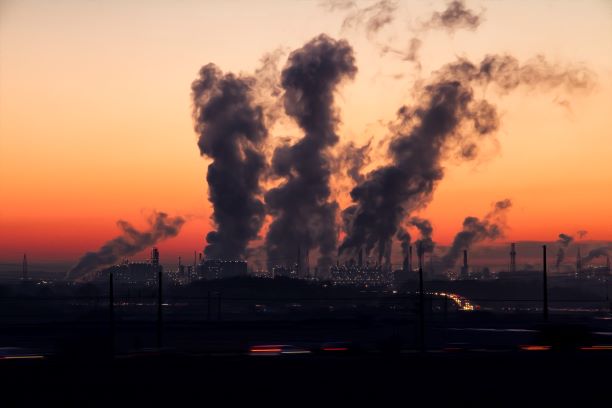
The Delhi government has launched a major innovation drive to combat air pollution, offering cash prizes of up to Rs 50 lakh for practical and scalable solutions that can significantly reduce pollution levels in the capital.
The initiative, led by the Delhi Pollution Control Committee (DPCC), invites proposals from innovators, start-ups, technology developers, R&D institutions, universities, and registered organizations across India.
Environment Minister Manjinder Singh Sirsa explained the roadmap and said that shortlisted teams will receive Rs 5 lakh and free trials after Stage 2. Those whose technologies pass validation tests at IITs and national laboratories, and meet government deployment requirements, will receive Rs 50 lakh and a pathway to large-scale implementation.
He held that while Delhi has recorded the highest number of clean-air days in a decade, the government’s long-term goal is to make every day a clean-air day. “Enforcement alone won’t get us there; this is a 24×7 innovation mission,” he said. “For the first time, Delhi is opening its doors widely to innovation—from individuals and start-ups to large technology developers. If your solution can effectively reduce PM2.5 and PM10, be installed easily, and remain cost-efficient, we’ll support it.”
Sirsa also highlighted that the evaluation process will be transparent and focused on real-world outcomes. “We will reward what truly matters—how much pollution is actually reduced, how affordable and adaptable the technology is, how fast it can be deployed, and how reliably it performs in Delhi’s conditions. Flashy but costly solutions won’t make the cut. The most cost-effective, high-impact innovations will score the highest,” he added.
Meanwhile, Union Environment Minister Bhupender Yadav chaired a high-level meeting on Delhi-NCR’s air quality, reviewing measures to prevent stubble burning and urging the creation of adequate storage facilities for crop residue to ensure its proper utilization after harvest.
In a related development, medical experts at the Indian Rheumatology Association’s annual conference (IRACON 2025) raised concerns that prolonged exposure to toxic air and PM2.5 pollutants may be contributing to a rise in rheumatoid arthritis cases across the Delhi-NCR region.