
Zero Prize Opens Rs. 5 Cr Pollution-Cutting Innovation Challenge
- The challenge was conceptualised by the School of Policy and Governance and is chaired by Saket Burman.
- The Rs. 5 crore initiative aims to identify and support implementation-ready innovations capable of delivering independently verifiable environmental impact under real-world conditions.
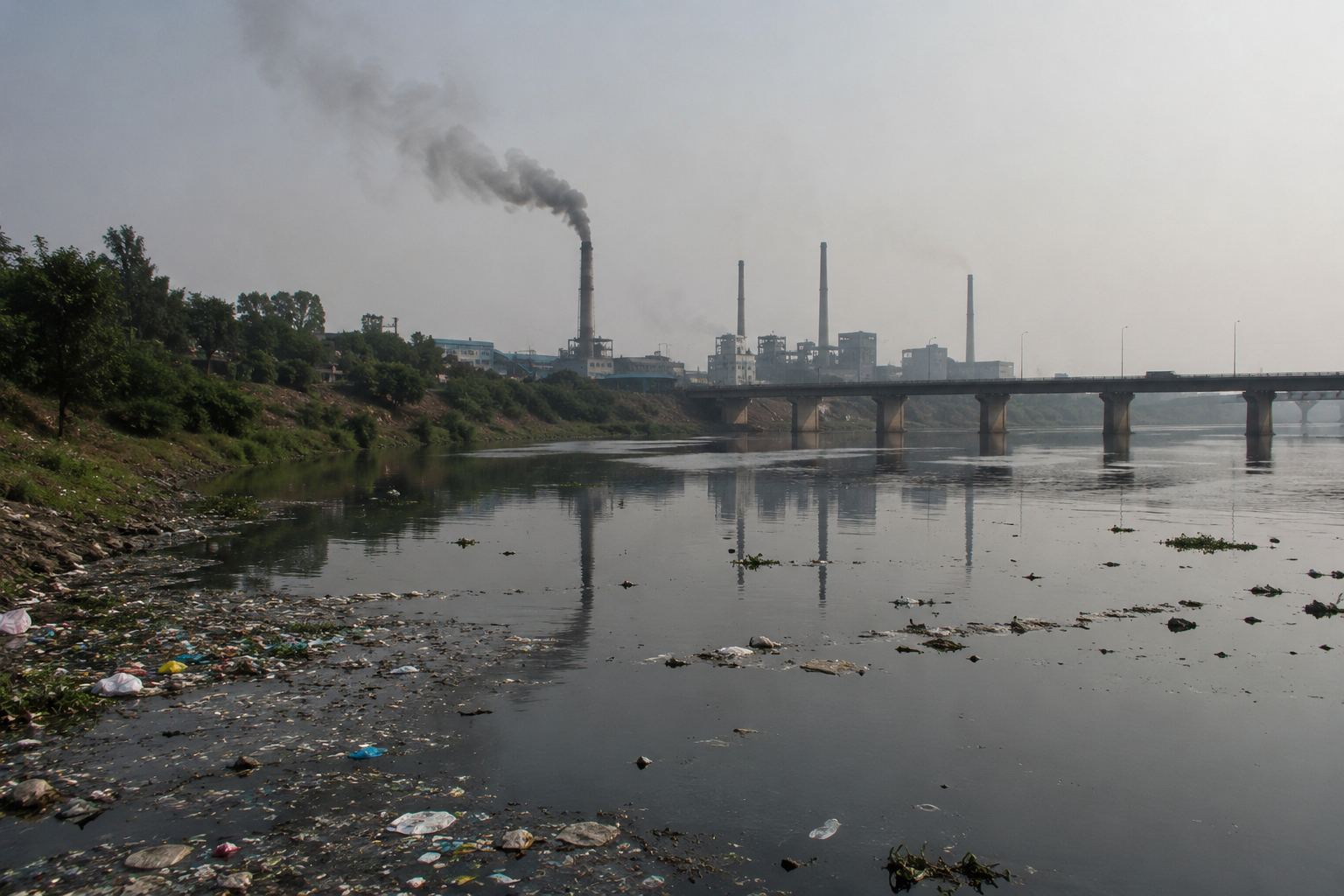
The Zero Prize, India’s national challenge focused on measurable pollution reduction, has opened applications for startups, innovators, companies, research institutions, and implementation agencies developing scalable solutions across air, water, and land pollution sectors.
The challenge was conceptualised by the School of Policy and Governance and is chaired by Saket Burman. The Rs. 5 crore initiative aims to identify and support implementation-ready innovations capable of delivering independently verifiable environmental impact under real-world conditions.
Applications submitted on or before 31 May 2026 will receive structured expert feedback to strengthen impact measurement methodologies, scalability pathways, and verification frameworks ahead of the final evaluation. The final submission deadline is 31 August 2026. The challenge is open to applicants with advanced solutions, including deployed technologies, operational models, pilot-stage interventions, and scalable implementation frameworks.
The Zero Prize will evaluate applications across three core categories. The air pollution category focuses on solutions that enable measurable reductions in PM2.5 and PM10 emissions. The water pollution category covers innovations aimed at improving wastewater treatment and reuse, enhancing oxygenation and biodiversity, and reducing total solid levels.
Additionally, the land and waste management initiative focuses on interventions supporting landfill diversion, recycling, waste recovery, and circular economy systems. The programme will also include special recognition categories such as the Youth Innovation Award, Civic Innovation Award, and Popular Vote Award, with each category carrying a prize of up to ₹10 lakh.
About the Programme
The challenge is expected to attract more than 500 applications from across India, including climate-tech startups, waste management companies, research institutions, urban innovators, civic organisations, and implementation agencies. It aims to build a national pipeline of scalable environmental interventions capable of supporting India’s broader sustainability, climate, and urban infrastructure priorities.
Applications will undergo technical assessment and independent evaluation supported by a Technical Braintrust and a Board of Advisors comprising experts from environmental, scientific, industrial, and policy ecosystems.
The initiative is also expected to strengthen collaboration among innovators, researchers, industry players, investors, urban bodies, and implementation agencies, while accelerating the adoption of data-backed environmental interventions across sectors.
The Zero Prize was formally launched earlier this year at the India Habitat Centre during Delhi Climate Innovation Week, alongside Dia Mirza, with participation from policymakers, climate experts, industry leaders, startups, and ecosystem stakeholders.
Applications will be assessed based on measurable environmental outcomes, scalability potential, and independently verifiable performance. The prize will also function as an accelerator by helping the most promising ideas scale through partnerships with corporates, as well as introductions to funders and potential customers.
Leadership View
“India does not lack innovation. What we urgently need are credible systems that can identify, validate, and scale solutions already demonstrating measurable environmental impact on the ground,” said Saket Burman, Vice Chairman of Dabur India Ltd and Chairperson of Zero Prize
“The Zero Prize has been designed to shift the conversation from environmental intent to verified outcomes. By introducing an early feedback process, we aim to strengthen the quality of applications while helping innovators build robust impact measurement systems capable of supporting larger-scale adoption.”