Petrol Dealers Association want CBG units at all fuel stations
The objective of the All India Petrol Dealers Association (AIPDA) is to reduce gas imports and transform waste into green fuel
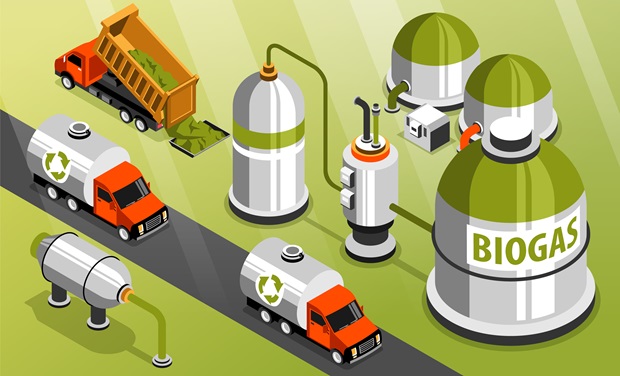 EverEnviro to develop 12 metric tons bio-CNG plant in Lucknow. Photo by-Macrovector/Freepik
To bolster energy self-reliance and sustainable practices, the All India Petrol Dealers Association (AIPDA) has proposed the installation of Compressed Biogas (CBG) units at petrol pumps across the country. The move aims to cut India’s dependence on imported fuel while converting organic and municipal waste into clean, renewable energy.
Ajay Bansal, President of AIPDA, stated that the concept is being showcased to empower petrol pump dealers to produce their own Compressed Natural Gas (CNG)-equivalent fuel.
Dealers can utilize 150–200 square yards within their existing petrol station premises to set up compact CBG plants. These units, costing around Rs 5–6 crore each, would integrate a biogas plant with a compressor, cascade system, and dispenser — enabling fuel production and dispensing on-site.
Bansal mentioned that these mini-plants will allow the conversion of agricultural stubble, municipal waste, and household garbage into valuable CBG. He also highlighted the dual benefits of energy generation and waste management while emphasizing that the rising energy demand — currently growing at 8–10% annually — makes such innovations crucial, especially when India imports nearly 90% of its crude oil.
India has already laid out an ambitious roadmap to install 5,000 CBG plants with a production target of 15 million metric tons (MMT) of CBG annually — equivalent to 40% of current CNG consumption. The estimated CBG potential in the country is about 62 MMT, alongside a biomanure generation potential of 370 MMT, indicating vast untapped opportunities.
With properties similar to CNG, CBG can seamlessly replace natural gas in vehicles and be used across industrial and commercial sectors — offering an eco-friendly alternative based on India’s abundant biomass resources.
This initiative aligns with the government’s SATAT Scheme that promotes large-scale CBG production to reduce dependency on imports, support rural employment, manage waste, and curb pollution caused by open burning of agricultural and organic waste.