
China operationalises world’s biggest green hydrogen & chemical project
Once fully completed, Qingqing No. 1 Project will deploy three million kilowatts of wind and solar power capacity to support green synthetic ammonia and green methanol plants with a combined annual output of 800,000 tonnes.
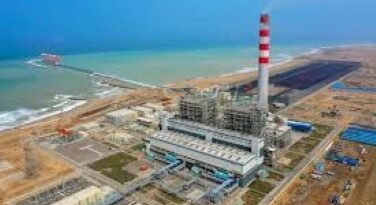
China has taken a major step in its clean energy transition with the commencement of operations at the world’s largest green hydrogen–ammonia–methanol integrated project in Songyuan, Jilin province. It has been termed as the Qingqing No. 1 project.
Developed by state-owned China Energy Engineering Corp., the green energy & chemical project marks a significant milestone in the deep integration of renewable power generation with the chemical industry.
The Qingqing No. 1 facility involves a planned investment of nearly CNY 30 billion (about USD 4.3 billion). Once fully completed, it will deploy three million kilowatts of wind and solar power capacity to support green synthetic ammonia and green methanol plants with a combined annual output of 800,000 tonnes.
The project follows an innovative “renewables-to-chemicals” model. Electricity generated from wind and photovoltaic sources is transmitted directly to a chemical industrial park, where it is used to electrolyse water and produce green hydrogen. This hydrogen is then converted into ammonia and methanol using established chemical processes, enabling long-term storage and transport of renewable energy in chemical form for domestic use and export.
The first phase of the project, which has now entered operation, includes 800,000 kilowatts of renewable power capacity and chemical facilities capable of producing 200,000 tonnes of green ammonia and methanol annually. At full operation, this phase alone is expected to reduce standard coal consumption by around 600,000 tonnes and cut carbon dioxide emissions by 1.4 million tonnes each year.
A key breakthrough of the project lies in addressing the mismatch between variable wind and solar output and the continuous operating needs of chemical plants. By using big data and artificial intelligence, the facility can dynamically adjust hydrogen production and chemical processing loads in line with real-time renewable power availability, ensuring stable operations while maximising green energy use.
The launch aligns with China’s broader push towards low-carbon energy. The country’s renewable hydrogen production capacity has now surpassed 220,000 tonnes annually—more than half of the global total—while green ammonia and methanol capacity stands at around one million tonnes.