Combating Sea Pollution: Indian Coast Guard gets pollution controlling vessel ‘Samudra Pratap’
Samudra Pratap is capable of high precision operations, recover pollutants from viscous oil, analyse contaminants and separate oil from contaminated water.
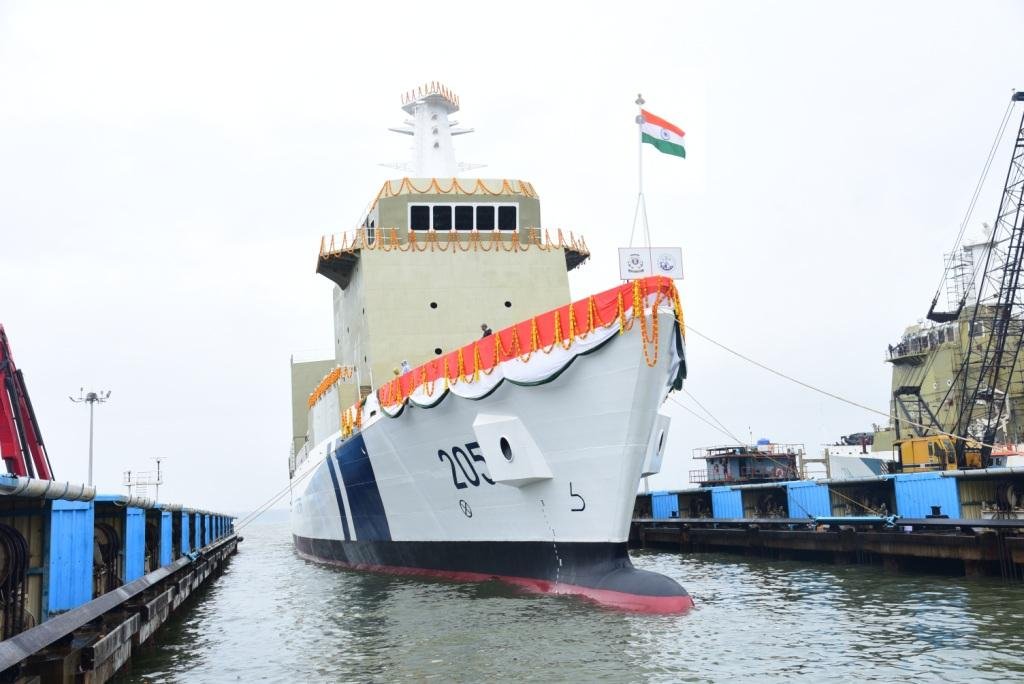
The Indian Coast Guard (ICG) inducted the first in-built Pollution Control Vessel (PCV), SAMUDRA PRATAP (Yard 1267) under the 02 PCV project of Goa Shipyard Limited (GSL).
Samudra Pratap is capable of high precision operations, recover pollutants from viscous oil, analyse contaminants and separate oil from contaminated water. With over 60% indigenous content, the induction of this ship reinforces the vision of Government’s Aatmanirbhar Bharat and Make in India initiatives.
‘Samudra Pratap’ is the first indigenously designed and built Pollution Control Vessel of the Indian Coast Guard. It is the largest ship in the ICG fleet, significantly enhancing the Coast Guard’s operational reach and capability. Measuring 114.5 metres in length and 16.5 metres in breadth, with a displacement of 4,170 tonnes, the vessel is equipped with state-of-the-art technology, including a 30mm CRN-91 gun, two 12.7mm stabilised remote-controlled guns with integrated fire control systems, an indigenously developed Integrated Bridge System, Integrated Platform Management System, Automated Power Management System, and a high-capacity external firefighting system.
The PC Vessel is the first Indian Coast Guard ship to be equipped with Dynamic Positioning capability (DP-1), with FiFi-2 / FFV-2 notation certificate. Samudra Pratap is equipped with advanced systems to detect oil spills viz Oil finger printing machine, Gyro stabilized Standoff Active Chemical Detector and PC lab equipment enabling comprehensive pollution response operations within the Exclusive Economic Zone and beyond.
The induction ceremony was graced by DIG VK Parmar, PD (MAT), ICG; Brajesh Kumar Upadhyay, Chairman & Managing Director, GSL and other senior officials from ICG and GSL.
Sea Pollution & India
India ranks among the world’s largest contributors to marine pollution, with its coastal and marine ecosystems under growing pressure from human activities. Pollution enters marine habitats through multiple sources, including the dumping of solid waste, untreated sewage, and industrial effluents into rivers and coastal waters.
In addition, discarded fishing gear, plastic packaging, and other single-use plastics significantly add to the burden, threatening marine biodiversity and livelihoods dependent on healthy oceans. The government authorities have revealed the presence of heavy metal in the seas around the Indian coastlines.