
Petroleum Ministry bats for ‘unified biogas policy’ to fasten up CBG projects
The proposed integration, is expected to enhance synergy, remove duplication, and streamline the implementation pipeline.
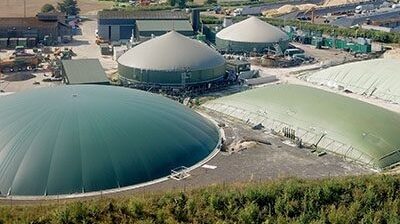
The Ministry of Petroleum and Natural Gas has proposed a consolidated policy framework to accelerate India’s compressed biogas (CBG) sector by streamlining multiple existing schemes under one umbrella. The initiative aims to remove procedural overlaps, speed up project execution and boost investor confidence in the emerging green-fuels market.
According to a concept note, the ministry has suggested creating a National Integrated CBG Promotion Scheme (NICPS) to unify CBG-related policies currently administered by different ministries. Under the proposal, the petroleum ministry will lead scheme operations, monitoring, and coordination across ministries, while the Ministry of New and Renewable Energy (MNRE) and the Department of Fertilizers (DoF) will continue managing financial incentives and market development within their respective domains.
At present, India’s CBG ecosystem is fragmented across three ministries – MNRE handles capital subsidies and financial support, DoF manages fertiliser-related market linkages for fermented organic manure, and the petroleum ministry oversees pipeline networks and biomass aggregation systems. The proposed integration, is expected to enhance synergy, remove duplication, and streamline the implementation pipeline.
India launched the SATAT (Sustainable Alternative Towards Affordable Transportation) scheme in 2018 to scale up CBG production, but growth has lagged behind the ethanol sector, which has expanded rapidly. As per reports, 134 CBG plants are currently operational nationwide, with nearly 70% owned by Indian PSUs. During the last fiscal year, India sold around 42,700 metric tonnes of CBG. Although several private companies have announced ambitious expansion plans, progress has been slow.
Key barriers include land acquisition, assured pricing, guaranteed offtake agreements, feedstock availability, low-cost financing and pipeline connectivity. The ministry said that a unified policy will tackle these constraints through end-to-end support—from project development to marketing—thereby reducing risks, lowering logistics costs and improving returns.
The NICPS, it added, is designed to accelerate India’s transition towards a circular bio-economy while strengthening the green energy value chain.