
Ethanol blending delivered Rs 1.36 lakh crore to Indian farmers in past decade
Minister Suresh Gopi said that ethanol blending saved more than Rs. 1,55,000 crore of India’s foreign exchange, net CO2 reduction of approximately 790 lakh metric tonne and substitution of more than 260 lakh metric tonnes of crude oil.
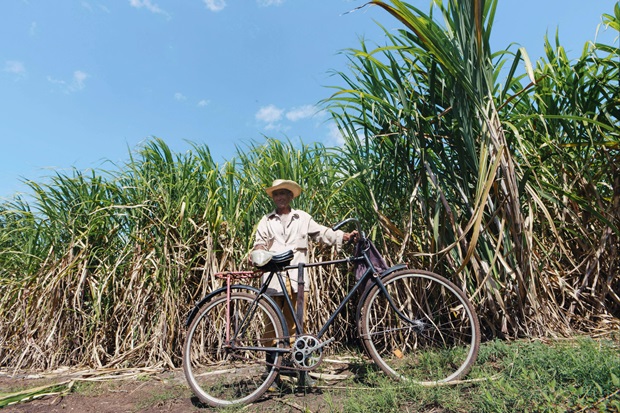 In India’s Ethanol Rush, Sugarcane Farmers Feel Neglected
As the winter session of the Parliament kicks off with some hustle-bustle between the government & opposition, Union Minister of State for Petroleum and Natural Gas Suresh Gopi has informed the Rajya Sabha that the ethanol blending program (EBP) has resulted in expeditious payment to farmers to a tune of over Rs. 1,36,300 crores from Ethanol Supply Year (ESY) 2014-15 up to October 2025.
Suresh Gopi said that ethanol blending saved more than Rs. 1,55,000 crore of India’s foreign exchange, net CO2 reduction of approximately 790 lakh metric tonne and substitution of more than 260 lakh metric tonnes of crude oil.
The Centre has been aggressively promoting ethanol–petrol blending through Public Sector OMCs. Ethanol supply under the EBP Programme has grown from 38 crore litres in ESY 2013-14 to over 1,000 crore litres in ESY 2024-25, enabling an average blending rate of 19.24% during ESY 2024-25. In October 2025 alone, blending reached 19.97%, inching closer to the national target of 20%.
To ensure robust feedstock availability and production capacity for achieving 20% blending by ESY 2025-26, the government has implemented a series of measures. These include widening the approved feedstock base, introducing an administered ethanol pricing mechanism, slashing GST on ethanol for EBP to 5%, and launching several Ethanol Interest Subvention Schemes between 2018 and 2022. A dedicated subvention scheme has also supported cooperative sugar mills in converting existing sugarcane-based distilleries into multi-feedstock plants.
The government sources have also been mulling to raise the blending target to 27% or beyond.
The Road Ahead
Further, 233 Long-Term Offtake Agreements (LTOAs) have been signed between OMCs and dedicated ethanol production units, raising the country’s annual distillation capacity to over 1,950 crore litres.
The Centre has approved allocation of 52 lakh metric tonnes (LMT) of surplus FCI rice each for ESY 2024-25 and 2025-26, and allowed the diversion of 40 LMT of sugar for ethanol production in ESY 2024-25. Production from sugarcane juice, sugar syrup, B-heavy molasses and C-heavy molasses will remain unrestricted in ESY 2025-26.
Additional initiatives include the Pradhan Mantri JI-VAN Yojana, which supports advanced biofuel projects using agricultural residue and other renewable biomass.