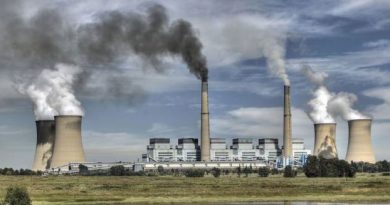
Rs 900 crore upgrade coming for Delhi’s waste-to-energy plant
The draft Environment Impact Assessment (EIA) report of the Tehkhand Waste-to-Energy (WTE) plant says that under the proposed expansion, power generation capacity will rise by 20 MW to a total of 45 MW.

As the national capital is striving fast to overcome the rampant pollution, the Tehkhand Waste-to-Energy (WTE) plant situated in Southeast Delhi is set for a significant upgrade. In a key development, the draft Environment Impact Assessment (EIA) report is now open for public consultation—a mandatory step before seeking clearance from the Expert Appraisal Committee of the Ministry of Environment, Forest and Climate Change.
Currently operated by Jindal Urban Infrastructure Limited, the facility processes about 2,000 tonnes of municipal solid waste every day and generates 25 MW of electricity. Under the proposed expansion, its power generation capacity will rise by 20 MW to a total of 45 MW.
The project also aims to diversify its output by producing up to 20,000 cubic metres of biogas daily from leachate and green waste slurry. This biogas can be converted into roughly 8 tonnes of Bio-CNG which offers an additional source of renewable energy.
According to the EIA, the expansion will involve an investment of around Rs 900 crore. Of this, Rs 465 crore has already been spent on the existing unit, while Rs 435 crore is earmarked for the new capacity. The company has clarified that no extra land will be needed for the project, as sufficient space is available within the plant’s current premises.
Delhi’s Quest for Clean Environment
The Air Quality Life Index (AQLI) report released by the Energy Policy Institute at the University of Chicago (EPIC) says that Delhi residents stand to lose 8.2 years of their life expectancy due to persistently high concentrations of PM2.5 in the city’s air. A new study by Nomura Research had recently revealed that waste to energy projects like CBG plants have the potential to reduce Delhi’s winter pollution by approximately 30 per cent. Hence, Delhi is bullish on deploying multiple waste to energy project – like the recent ones approved for Bawana & Ghazipur landfill – to combat the ills of pollution.
Last August, the Central Pollution Control Board (CPCB) and Delhi Pollution Control Committee (DPCC) conducted a joint assessment of four waste-to-energy plants at Okhla, Ghazipur, Bawana and Tehkhand and held that they are largely compliant with regulatory standards and pose minimal risk to public health or the natural environment.