10,000 Litres Of Water For A Litre Of Ethanol? Should We Be Worried?
Strong narratives can take on a life of their own, which is perhaps why we got a quick response to a new one that started recently. The issue in question? That India’s ethanol push risks placing water security at risk, thanks to the huge amounts of water needed for every litre of ethanol. With a capacity of almost 2000 crores, or 200 billion litres of ethanol, the thought of 10,000 litres of water for every litres of that is indeed worrying. Or is it? First, lets hear what Deepak Ballani, Director General, Indian Sugar & Bio-Energy Manufacturers Association (ISMA), has to say on the commentary -“10,000 litres water for one litre of ethanol: India’s fuel push to worsen water crisis”.
 “While concerns have been raised in recent commentary, it is important to recognise that the Ethanol Blending Programme was introduced at a time when the sugar sector was facing a severe glut in 2018, with prices falling to decade-low levels. The policy provided a vital and timely avenue to channel surplus sugar into ethanol, thereby restoring market balance.
So while Ballani points to the wider benefits of the programme, three key questions remain.
Q1: Is the 10,000 litres per litre of ethanol claim correct?
Partially — but it’s being applied too broadly. The 10,000-litre figure is specifically accurate for rice-based ethanol. Producing one litre of ethanol from rice requires roughly 10,790 litres of water, since about 2.5 to 3 kg of rice is needed per litre of fuel, and rice cultivation itself needs 3,000–5,000 litres of water per kg.
For sugarcane-based ethanol — which is actually the dominant feedstock in India — the figure is significantly lower. Studies indicate that every litre of sugarcane-derived ethanol requires around 2,860 litres of water. An ICAR-IISR study commissioned by ISMA goes even further, putting the water required to produce one litre of ethanol from sugarcane at approximately 2,000 litres, arguing sugarcane is actually the most water-efficient crop among major Indian staples.
So the 10,000-litre narrative is broadly correct for rice but a roughly 3–5x exaggeration when applied to sugarcane molasses, which dominates India’s current ethanol programme.
Q2: Does the figure include water used to grow the crop, or is it an additional cost after molasses is procured?
This is the more important methodological question. The answer is that the figure is a full lifecycle / water footprint number — the vast majority of it is agricultural water (rainfall + irrigation used to grow the crop), not the water consumed in the distillery itself.
Direct water consumption in the actual ethanol production process is just about 3.5 litres per litre of ethanol — the rest, over 500 litres per litre in one study of sugarcane bagasse-based routes, is indirect water embedded in crop cultivation. In practical terms: if a distillery procures molasses as a by-product from a sugar mill, the water used to grow that sugarcane has already been “spent” in producing the sugar. Whether you then allocate all of that agricultural water footprint to the ethanol or split it between the sugar and the molasses is a methodological choice — and different studies make different assumptions here. The more rigorous lifecycle analyses use economic or mass allocation to distribute the agricultural water cost between sugar and molasses, which further reduces the effective water burden of molasses-route ethanol.
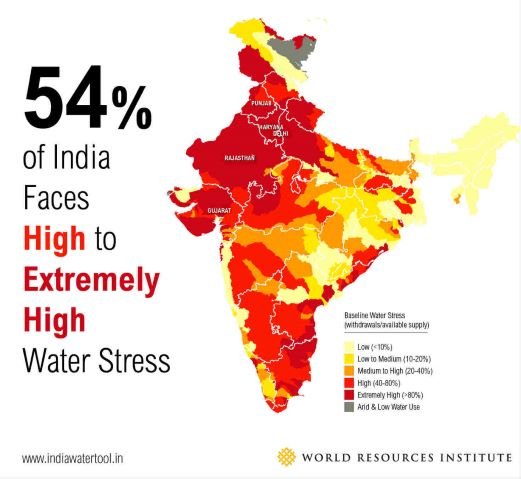
Bottom line: The 10,000-litre claim is technically valid only for rice-based ethanol and is misleading when applied to sugarcane. The figure always includes crop-level water, not just processing water — and the processing water itself is negligible. The real concern is that India’s ethanol production capacity is heavily concentrated in water-stressed regions — Maharashtra, UP, Karnataka — where groundwater reserves are already critically depleted, making the geographic and hydrological context more important than the headline litre-per-litre number.
So perhaps the focus should more be on water conservation and changes in agricultural practices to conserve water. Or avoid wasteful use of water. For some reason, going for agricultural use of water has been a taboo subject in India, right from the appropriateness of growing water intensive crops in water stressed areas, to the need to follow practices that can actually conserve water. Considering the many pros and cons of ethanol production, we believe a balance can be found of a more holistic view is taken here.