Vedanta Power cuts stubble burning with farm waste-to-energy model in Punjab
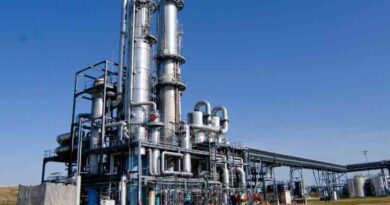
The company said that its Talwandi Sabo Power Limited (TSPL) plant in Mansa has achieved an average biomass co-firing rate of 5.21 per cent in FY26 so far, beyond regulatory requirements.

As India looks to tackle seasonal air pollution caused by stubble burning, Vedanta Power claims to have scaled up its farm waste-to-energy model in Punjab and has emerged as a key private sector player in biomass co-firing.
The company said that its Talwandi Sabo Power Limited (TSPL) plant in Mansa has achieved an average biomass co-firing rate of 5.21 per cent in FY26 so far, exceeding regulatory requirements set by the Commission for Air Quality Management (CAQM).
Under CAQM norms, thermal power plants within a 300 km radius of Delhi are mandated to co-fire biomass along with coal to curb emissions and address crop residue burning.
Vedanta Power said that TSPL has co-fired over 3.60 lakh metric tonnes of torrefied biomass in FY26, leading to an estimated reduction of 0.40 million tonnes of carbon dioxide emissions.
The Vedanta Power model involves procuring paddy straw from farmers, which is then converted into torrefied biomass pellets and used as fuel in thermal power generation, offering an alternative to open-field burning.
Vedanta Power also informed that it has engaged around 3,800 farmers in the Mansa region and facilitated the collection of over 8 lakh metric tonnes of paddy straw, helping build a structured biomass supply chain ecosystem.
To support operations, the company has also enabled the development of a torrefied bio-pellet manufacturing facility in Punjab with a capacity of 1,000 tonnes per day.
The impact of the initiative is visible at the ground level, with stubble burning cases in Mansa declining sharply from 2,253 in 2023 to 306 in 2025 — a reduction of nearly 87 per cent. Over 100 villages reported zero farm fire incidents, while more than 28,000 acres of farmland were protected from burning.
“Sustainability is embedded in how we operate. At our Talwandi Sabo plant, we are enabling a cleaner thermal power transition by integrating biomass co-firing while continuing to deliver reliable power at scale,” Vedanta Limited CEO–Power Rajinder Singh Ahuja said.
He added that the company’s approach combines technology upgrades, supply chain partnerships, and farmer engagement to create a scalable “waste-to-wealth” model.