GOBARdhan adds 500 biogas plants in India: Finance Ministry
Of the 529 community biogas plants completed so far, 470 are operational under the Swachh Bharat Mission (Grameen).
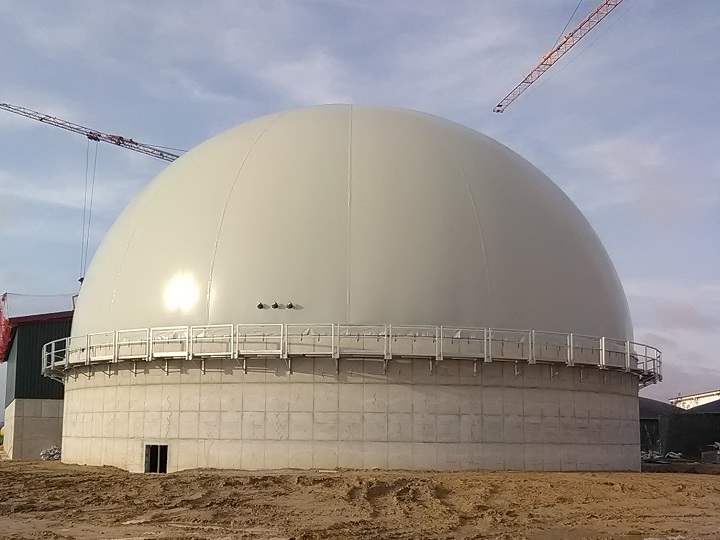
India’s waste-to-energy push under the GOBARdhan (Galvanising Organic Bio-Agro Resources Dhan) scheme has crossed a key milestone, with more than 500 community biogas plants completed nationwide.
This has been revealed in the Budget 2023–24 delivery review released by the Ministry of Finance. The achievement signals growing momentum in the government’s efforts to convert organic waste into clean energy while strengthening the circular economy.
Implemented by the Ministry of Jal Shakti, the GOBARdhan scheme is a cornerstone of India’s waste-to-wealth strategy, promoting the production of biogas and compressed biogas (CBG) from agricultural residue, cattle dung, and organic municipal waste. The original roadmap envisaged setting up 500 new waste-to-wealth plants—200 CBG units, including 75 in urban areas, and 300 community or cluster-based biogas plants—with an estimated investment of Rs 10,000 crore. The plan also includes a proposed 5% mandatory blending of CBG for gas marketing entities.
As per reports, of the 529 community biogas plants completed so far, 470 are operational under the Swachh Bharat Mission (Grameen). A further 222 community plants are currently under construction, pointing to continued capacity expansion. In the CBG segment, 37 plants are operational, while 133 are at various stages of development.
To improve transparency and coordination, the government has launched a Unified Registration Portal for biogas and CBG facilities. To date, 792 CBG plants and 1,413 biogas plants have been registered on the platform.
Several policy measures have been introduced to support scale-up and market offtake. These include the extension of the CBG–City Gas Distribution (CGD) synchronisation scheme until 2034, financial assistance for biomass aggregation machinery, and phase-wise mandatory blending of CBG in CNG and PNG. Regulatory reforms under fertiliser norms, market development assistance for organic manure, inclusion of CBG in carbon markets, and investments in pipeline infrastructure are further expected to strengthen the ecosystem and accelerate adoption.
Recently, Union Minister Hardeep Singh Puri stated that India has commissioned 132 Compressed Biogas (CBG) plants with a combined production capacity of 920 tonnes per day (TPD) under the SATAT initiative.