Govt procurement vital for speeding up India’s ‘Green Steel’ transition: CII Study
The CII study notes that introducing a modest green steel mandate could create the country’s first large-scale, assured market for certified low-carbon steel starting from FY2028, while supporting India’s broader decarbonisation goals.
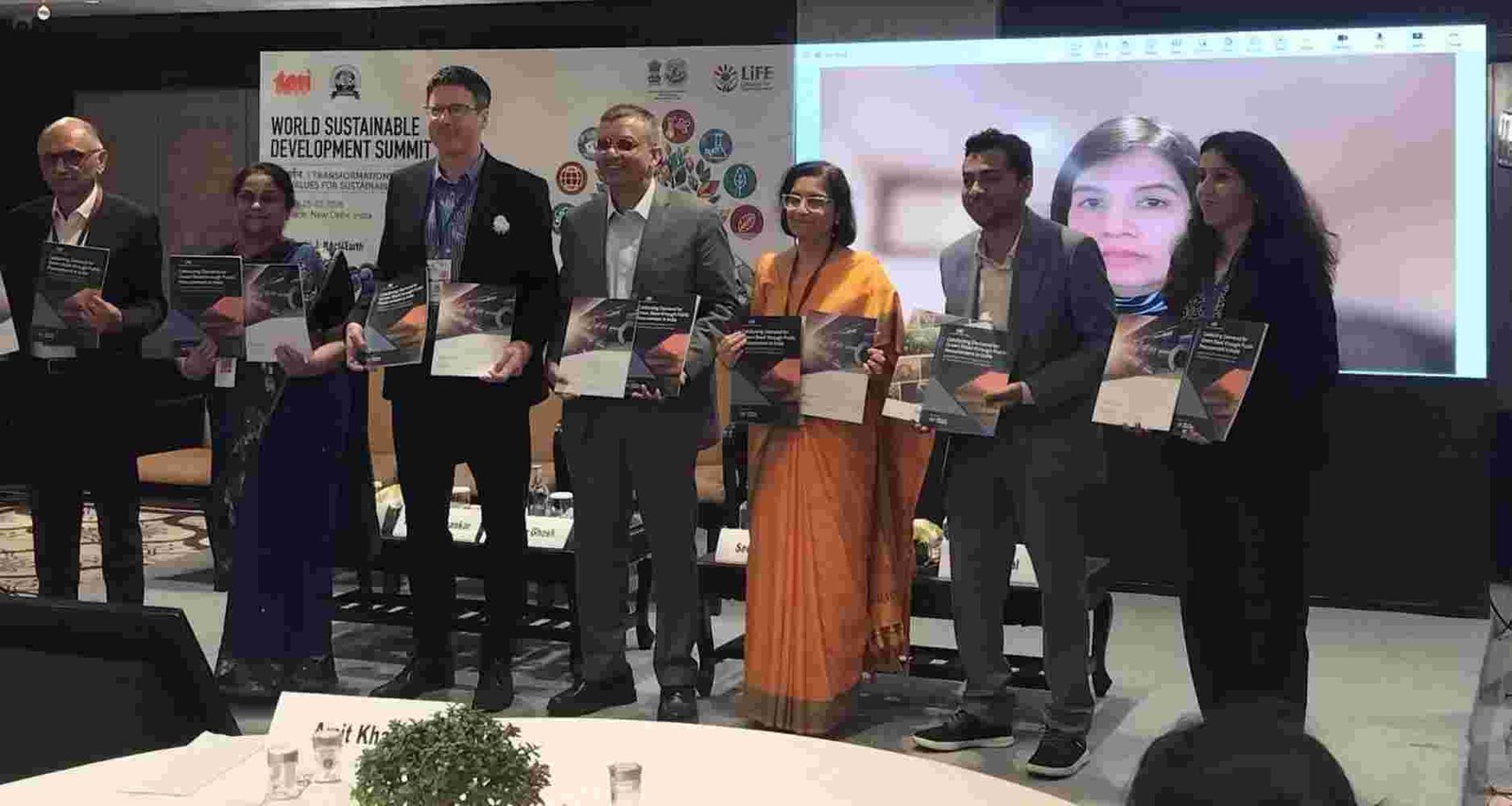
A new study by the Confederation of Indian Industry (CII)–Green Business Centre, supported by Climate Catalyst, has highlighted the significant potential of mandating green steel use in public procurement to accelerate India’s transition toward low-carbon manufacturing. According to the study, requiring just 26 per cent green steel in government projects could unlock demand for up to 16 million tonnes per annum (MTPA) of certified low-carbon steel by FY2030.
Public procurement in India accounts for an estimated Rs 45–50 lakh crore annually. Government-linked infrastructure projects alone consume about 31.6 million tonnes of steel each year and generate nearly 70 million tonnes of carbon dioxide emissions, based on FY2024 estimates. The study notes that introducing a modest green steel mandate could create the country’s first large-scale, assured market for certified low-carbon steel starting from FY2028, while supporting India’s broader decarbonisation goals.
The assessment was based on feedback from major stakeholders across the steel value chain, including 28 steel producers with a combined crude steel capacity of 88 MTPA and 12 major public procuring agencies. The findings show strong industry readiness, with 93 per cent of surveyed producers indicating their willingness to supply certified green steel at scale if a formal mandate is introduced. However, producers emphasised the need for mechanisms to recover the cost premium associated with green steel production, such as GST concessions, carbon credit offsets, or a defined price premium.
K S Venkatagiri, ED of CII, noted, “By encouraging the use of certified low-emission steel in public infrastructure, housing, and transport projects, government demand can support market development for cleaner steel and help reduce the cost gap between green and conventional products.
Sakshi Balani, Director, Climate Catalyst, added, “With minimal cost impact and massive climate returns, it is the most realistic tool India has, to drive real transition this decade.”
Public procurers also expressed readiness to adopt green steel procurement provided certain enabling measures are introduced. These include a clearly notified national mandate with defined percentage thresholds, ready-to-use tender clauses and monitoring frameworks, short training programmes for procurement teams, and limited fiscal support during the initial three years of implementation.
The study argues that the timing is particularly favourable as the Union Budget has significantly increased public capital expenditure to ₹12.2 trillion for FY2026-27, further strengthening India’s infrastructure push. Redirecting a portion of this demand toward low-carbon steel could deliver long-term emissions reductions while only marginally increasing project costs.
Case studies covering housing projects under Pradhan Mantri Awas Yojana-Urban 2.0, metro rail systems, and Indian Railways projects indicate that incorporating green steel would increase total project costs by only 0.2 to 1.2 per cent. Despite this minimal cost impact, a 26 per cent mandate could help avoid up to 20.9 million tonnes of carbon dioxide emissions by FY2030, while a higher 37 per cent mandate could reduce emissions by nearly 29.7 million tonnes annually.
The report also outlines a roadmap for implementing Green Public Procurement (GPP) in the steel sector. It suggests beginning with a policy announcement in 2026-27, followed by integration into the Schedule of Rates used for public tenders, standardised tender templates, and a few high-visibility pilot projects. Transitional fiscal support during the initial phase could further help accelerate adoption.
Additionally, the study recommends the formation of an inter-ministerial Green Public Procurement Steel Task Force under the Ministry of Steel to oversee implementation, address policy bottlenecks, and coordinate across procurement, finance, and industrial stakeholders.
According to the report, a well-structured GPP rollout could enable government projects to absorb up to 24 MTPA of certified green steel by FY2030. With institutional frameworks such as the General Financial Rules, the Carbon Credit Trading Scheme, and certification mechanisms already in place, the study concludes that green public procurement could become one of the most effective policy tools to drive India’s steel sector decarbonisation in the coming decade.