Gujarat comes up with Green Hydrogen Policy 2025
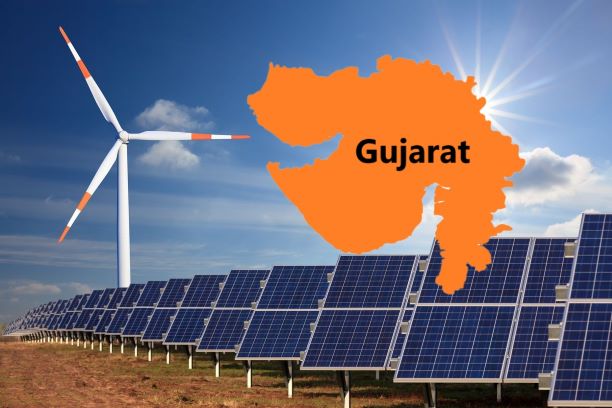
The Gujarat government has announced its ambitious Green Hydrogen Policy 2025, setting the stage for the State to emerge as a major hub for green hydrogen production and clean energy–led industrial growth. The policy aligns with India’s broader decarbonisation and net-zero goals, while leveraging Gujarat’s strengths in renewable energy, ports, and industrial infrastructure.
Under the policy framework, Gujarat aims to attract investments exceeding ₹5 lakh crore across the green hydrogen and renewable energy ecosystem. These investments are expected to generate nearly six lakh direct and indirect jobs, spanning manufacturing, infrastructure development, operations, and allied services.
A key target of the policy is the development of 3 million tonnes per annum (MTPA) of green hydrogen production capacity. This will be supported by the installation of 30 GW of electrolyser capacity and 75 GW of renewable energy capacity, creating a fully integrated value chain to enable large-scale industrial decarbonisation and green fuel production.
Gujarat also seeks to reduce natural gas consumption by at least 2 MMTPA and eliminate around 5 MMTPA of carbon emissions through the adoption of green hydrogen.
To achieve these goals, the policy focuses on strengthening the entire hydrogen value chain—from production and storage to transportation and end-use applications. It encourages public-private partnerships, innovation, skill development, and research in advanced technologies such as electrolysers and fuel cells.
The policy outlines eligibility criteria and a structured project selection mechanism, including competitive bidding and approvals through Apex and Executive Committees. Incentives are offered for electrolyser-based and biomass-based hydrogen projects, green hydrogen hubs, refuelling infrastructure, and hydrogen-powered buses and heavy vehicles. MSMEs and City Gas Distribution operators blending green hydrogen are also eligible for support.
Enabling infrastructure—including land through GIDC, water supply and desalination, renewable power linkages, transmission corridors, storage systems, and port facilities for exports—forms a critical pillar of the policy. A dedicated budget supports R&D, start-ups, Centres of Excellence, and pilot projects.
With current green hydrogen demand estimated at 1.3 MTPA and projected to reach nearly 2 MTPA by 2030, Gujarat’s Green Hydrogen Policy 2025 positions the State as a frontrunner in India’s clean energy transition and a key contributor to global decarbonisation efforts.