
Punjab government directs thermal power plants to buy biomass pellets locally
To strengthen monitoring, nearly 10,000 personnel—including 5,000 nodal officers, 1,500 cluster coordinators and 1,200 field officers—have been deployed across 11,624 villages; all for improving the natural environment of the state.
 Too Close to Home
The Punjab government has instructed thermal power plants across the state to prioritise procurement of biomass pellets from local manufacturers, following complaints that Punjab-based units were being overlooked in favour of suppliers from Haryana.
Confirming the move, Dr. Karunesh Garg, Chief Environmental Engineer (Air), said clear directives have been issued to all operators. Regional officers in Ropar, Patiala and Bathinda will conduct regular audits to ensure compliance.
To strengthen monitoring, nearly 10,000 personnel—including 5,000 nodal officers, 1,500 cluster coordinators and 1,200 field officers—have been deployed across 11,624 villages. They will submit daily reports via the “Action Taken Report” mobile app, jointly developed by the Punjab Pollution Control Board (PPCB) and Punjab Remote Sensing Centre (PRSC).
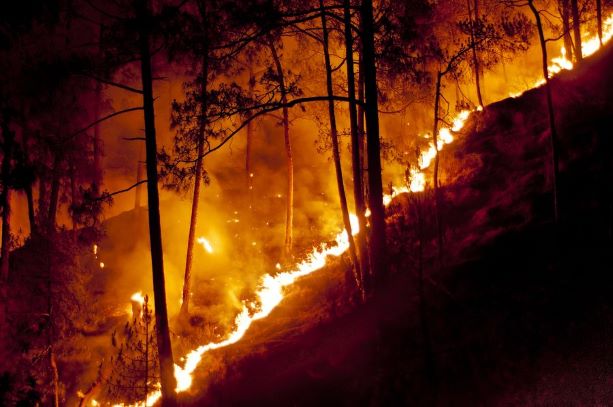
Punjab produces about 20 million tonnes of paddy residue annually, of which nearly 16 MT comes from non-basmati crops. Biomass pellets, made from this residue, offer a sustainable solution to the problem of stubble burning by converting waste into clean energy fuel for power plants and brick kilns. This not only reduces greenhouse gas emissions but also creates an alternate income stream for farmers.
In a recent meeting with PPCB, local pellet manufacturers argued that sourcing from outside the state discourages effective stubble management. For instance, Patiala Thermal Plant has 10 pellet suppliers, four of whom are from outside Punjab.
On Right Path
The Commission for Air Quality Management (CAQM) has already directed Punjab and Haryana to ensure at least 5% blending of biomass pellets in fuel. It also asked Punjab to form a ‘Parali Protection Force’ to curb stubble burning.
The impact is visible: between 2021 and 2024, stubble burning incidents in Punjab dropped by over 80%, saving more than 35 lakh MT of CO₂ emissions nationwide. With rising investments in bioenergy, Vedanta’s Talwandi Sabo Power Limited has also set up Punjab’s largest biomass facility near Mansa, boosting the state’s circular economy.