EBP paid Rs 1.43 lakh cr to farmers; Grain based ethanol find centre-stage: Suresh Gopi in Parliament
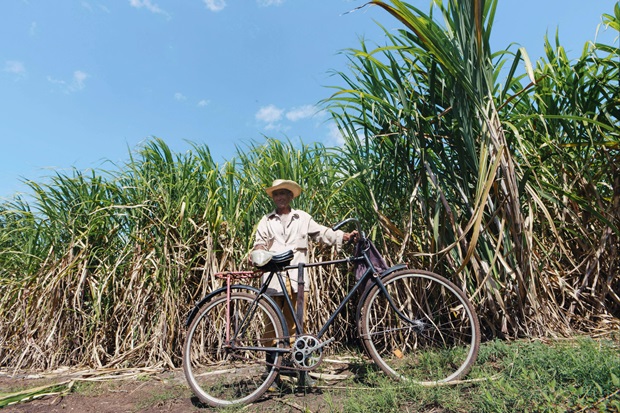 In India’s Ethanol Rush, Sugarcane Farmers Feel Neglected
India’s Ethanol Blended Petrol (EBP) programme has delivered substantial financial and environmental gains, with payments to farmers exceeding Rs 1.43 lakh crore since its launch. Union Minister of State for Petroleum and Natural Gas Suresh Gopi informed the Parliament (Lok Sabha) that from Ethanol Supply Year (ESY) 2014-15 up to December 2025, oil marketing companies have disbursed Rs 1,43,822 crore to farmers of India.
Gopi said that during the same period, the country achieved foreign exchange savings of over Rs 1,63,395 crore.
In a written reply to Parliament, the minister highlighted that the EBP initiative has contributed to a net reduction of around 832 lakh metric tonnes of CO₂ emissions and replaced over 277 lakh metric tonnes of crude oil, strengthening India’s energy security while advancing climate goals.
To meet the target of 20% ethanol blending in petrol, the government has introduced a series of policy measures. These include expanding approved feedstocks, implementing an administered price mechanism for ethanol procurement, reducing GST on ethanol supplied under the programme to 5%, and rolling out Ethanol Interest Subvention Schemes between 2018 and 2022.
Additional steps comprise a dedicated subvention scheme enabling cooperative sugar mills to convert existing distilleries into multi-feedstock units, signing 233 long-term offtake agreements between oil marketing companies and ethanol producers, allocating 72 lakh metric tonnes of surplus Food Corporation of India rice for ESY 2025-26, and diverting 40 lakh metric tonnes of sugar for ethanol production in ESY 2024-25.
The government has also permitted unrestricted ethanol production from sugarcane juice, sugar syrup, B-heavy molasses and C-heavy molasses for ESY 2025-26. Further support has come through the notified “Pradhan Mantri JI-VAN Yojana,” which provides financial assistance for advanced biofuel projects using lignocellulosic biomass.
Looking at Food vs Fuel Struggle
Gopi Suresh also emphasised on the rising use of grain in ethanol production. He said that grain-based ethanol capacity has expanded rapidly. Of the total ethanol allocated so far, about 760 crore litres have come from non-sugar sources, indicating that India now has sufficient production capacity to achieve and sustain the 20% blending target without depending heavily on sugarcane.
Many would see this as a new struggle in the form of ‘Food vs Fuel’ debate. The latest Economic Survey too has cautioned about possible food scarcity as more & more grains are being diverted to make ethanol in India.