CLEANING YAMUNA: CM Rekha Gupta inaugurates Nangli Dairy biogas plant

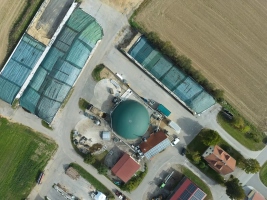
Delhi Chief Minister Rekha Gupta has inaugurated a state-of-the-art biogas plant at Najafgarh, aimed at reducing pollution in the Yamuna by treating cattle dung and municipal waste. Developed at a cost of Rs 16 crore, the facility in Nangli Dairy is spread over 2.72 acres and has a processing capacity of 200 tonnes per day (TPD).
The plant, built with partial funding from the Union Ministry of Housing and Urban Affairs, will generate 5,600 kg of compressed biogas daily. This will be supplied to Indraprastha Gas Limited through pipelines. In addition, the plant will produce nearly 30 tonnes of organic compost each day, to be distributed among farmers to improve soil fertility.
Equipped with three digesters, the facility is currently operating on a trial basis, processing 25 tonnes of dung daily, and is expected to reach full capacity by next month. Waste will be collected from dairy owners at a rate of 65 paise per kg, as per Municipal Corporation of Delhi (MCD).
Speaking at the launch, the Chief Minister said the project would not only generate clean fuel and natural fertilizer but also curb waste flow into the Yamuna, a major source of river pollution. “This plant will make the surrounding areas cleaner and marks a key step towards rejuvenating the Yamuna,” she held.
Work began on the project in December 2018. The MCD also announced two similar 200MT biogas plants at Gogha and Goyla dairies, slated for completion by December 2025 and March 2026. Additionally, three decentralised biomethanation plants are under development to process 750MT of daily wet waste, producing high-purity bio-CNG. The first, at Ghogha, will be fully operational from September 26, with others coming up at Okhla and Ghazipur by 2026.
A new study by Nomura Research recently concluded that biogas (CBG) plants have the potential to reduce Delhi’s winter pollution by approximately 30 per cent by utilizing paddy straw as a key feedstock. The research highlighted that a single biogsa plant can mitigate emissions equivalent to those of 150,000 electric cars