Centre allows ethanol production from sugarcane juice, syrup & molasses
The decision by the Department of Food and Public Distribution (DFPD) aims to boost ethanol blending in petrol while ensuring sufficient sugar supply for domestic consumption.
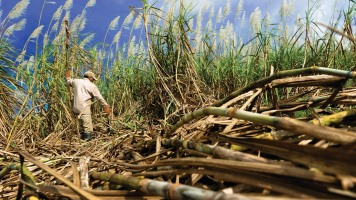
The Centre has allowed sugar mills and distilleries to produce ethanol from sugarcane juice, sugar syrup, B-heavy molasses (BHM), and C-heavy molasses (CHM) during the Ethanol Supply Year (ESY) 2025-26 without any restrictions.
In a circular, the Department of Food and Public Distribution (DFPD) said this decision aims to boost ethanol blending in petrol while ensuring sufficient sugar supply for domestic consumption. DFPD, along with the Ministry of Petroleum and Natural Gas (MoPNG), will review sugar diversion to ethanol at regular intervals to balance both requirements.
In August 2024 also, the sugar mills and distilleries were authorized to produce ethanol from sugarcane juice/syrup, B-Heavy molasses, and C-Heavy molasses during ESY 2024-25 as per agreements with Oil Marketing Companies.
India has been aggressively pushing ethanol blending under the Ethanol Blended Petrol (EBP) programme. Public Sector Oil Marketing Companies (OMCs) achieved an average blending of 19.05% as of July 31, 2025, during the ongoing ESY 2024-25. The National Policy on Biofuels, 2018—amended in 2022—advanced the 20% blending target from 2030 to ESY 2025-26.
Uttar Pradesh, India’s top sugarcane-producing state, is expected to play a pivotal role in meeting these targets. The state currently produces about 160 crore litres of ethanol annually through 90 distilleries, a figure projected to rise to 180 crore litres in the upcoming ESY. With an installed capacity of 224 crore litres, UP ranks second only to Maharashtra (305 crore litres) in production capacity, while maintaining its lead in actual ethanol output.
The Modi Government has also permitted distilleries to purchase rice from the Food Corporation of India (FCI) specifically for ethanol production. They can participate in the FCI auctions. This move is intended to enhance ethanol output and support the broader strategy of blending ethanol with fuels.