Andhra Pradesh to build 5 new CBG plants in urban areas
The state government has approved nearly Rs 60 crore for the five CBG plants that would come up at Rajamahendravaram, Nellore, Guntur, Ongole and Vijayawada.
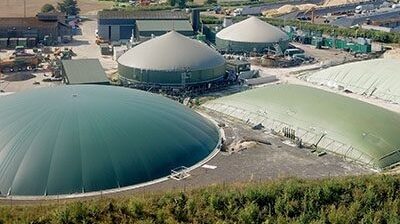
The state government of Andhra Pradesh has approved an outlay of nearly Rs 60 crore to establish five compressed biogas (CBG) plants across selected urban local bodies, aiming to strengthen municipal solid waste-based bio-energy infrastructure in the state.
According to an official statement, administrative sanction of Rs 59.85 crore has been granted for setting up the five plants in key urban centres. The projects will be developed in Rajamahendravaram, Nellore, Guntur and Ongole, along with the revival and upgradation of an existing CBG facility in Vijayawada.
Each of the four new CBG facilities will process 25 tonnes per day (TPD) of waste, while the Vijayawada CBG plant will be upgraded to handle a similar capacity, taking the combined processing capacity across all five locations to 125 TPD.
As per reports, the CBG projects will be implemented with technical support from the Council for Scientific and Industrial Research–Indian Institute of Chemical Technology (CSIR-IICT), Hyderabad. The move follows a strategic shift by the state government after earlier attempts to attract private participation through public-private partnership (PPP) tenders received limited response.
The Andhra Pradesh government looks firm on its intent to give unprecedented stimulus to bioenergy. A year ago, the State Minister for Energy Gottipati Ravi Kumar stated that Andhra will see the development of 500 biogas/CBG projects across districts. This was preceded by the unveiling of the ambitious plan of the Andhra Pradesh government to attract Rs 10 lakh crore investment in the clean energy sector. The state looks to achieve the net-zero carbon emissions target by 2047.
Reliance Industries has already planned 500 CBG plants in the state. Australia-based Arvensis Group announced a Rs 150 crore investment to set up a CBG plant in Andhra Pradesh, with a daily capacity of 12 to 20 metric tonnes.