Artificial Snow and Fewer Freezes: The New Normal for Winter Sports
- Rising temperatures are forcing the 2026 Winter Olympics to rely on artificial snow, highlighting how climate change is shrinking reliable host cities and straining winter sports worldwide, including in India.
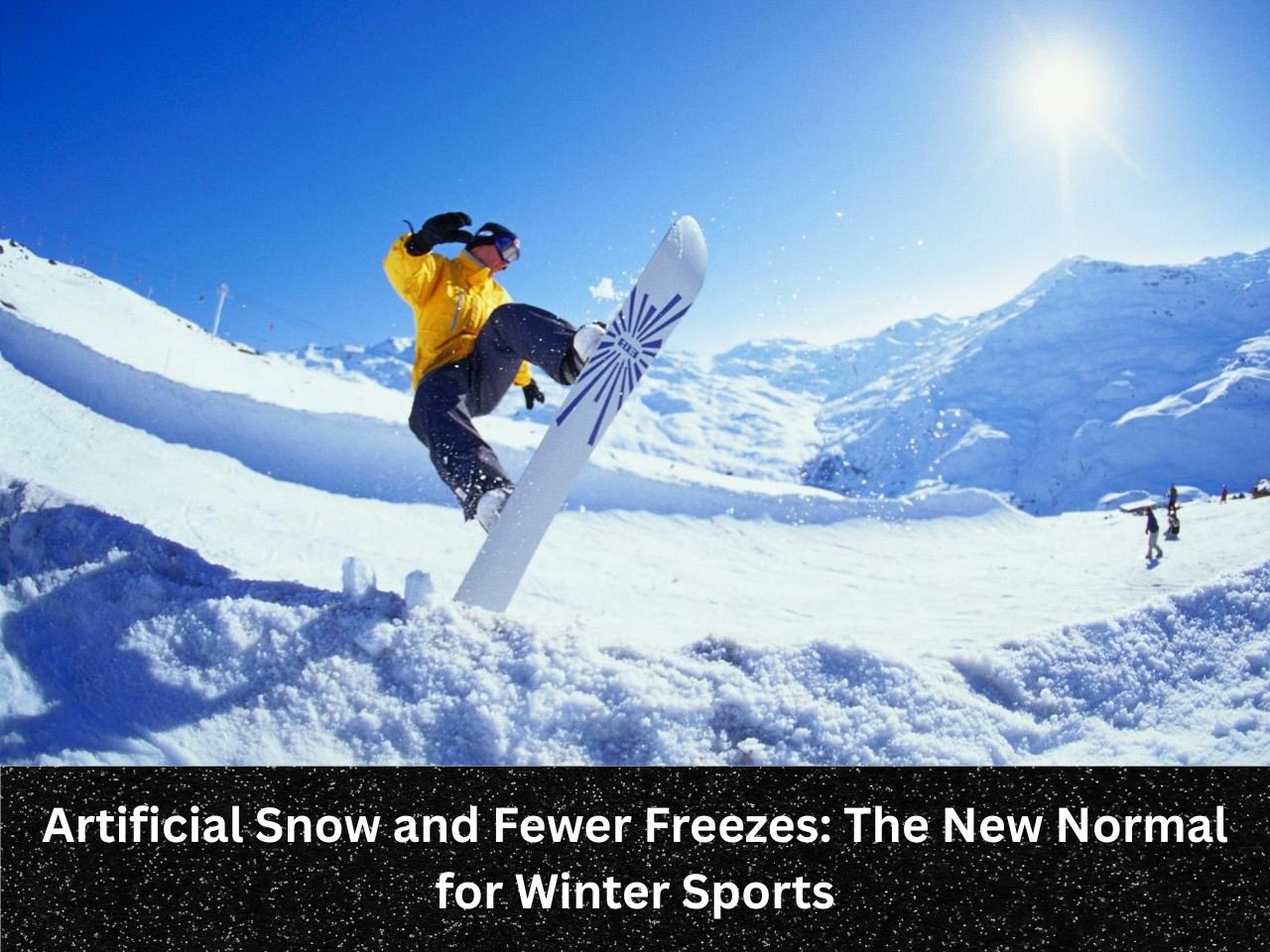
The 2026 Winter Olympic Games will begin on February 6, followed by the Winter Paralympics on March 6, with events spread across northern Italy. While Milan will host most indoor competitions, outdoor events will take place in the Alpine resort town of Cortina d’Ampezzo. Despite its high-altitude location in the Italian Alps, the Winter Games are expected to rely heavily on artificial snow, with organisers planning to use more than 3 million cubic yards to ensure competition-ready surfaces. The growing dependence on manufactured snow reflects a broader challenge confronting winter sports worldwide: rising temperatures are steadily eroding the cold, snowy conditions on which these events depend.
As winters become warmer and less predictable, ensuring safe and fair conditions for outdoor competitions is increasingly complex. Weather reliability is now a central concern for both the Olympics and the Paralympics, particularly for events that cannot be easily moved indoors.
Warming Host Cities, Shrinking Margins
Cortina d’Ampezzo last hosted the Winter Olympics in 1956. Since then, average February temperatures in the region have increased by 6.4°F (3.6°C). During the decade from 2016 to 2025, average February temperatures reached 27.1°F, compared with 19.3°F between 1956 and 1965, pushing conditions closer to the freezing threshold.
Snowfall has declined alongside warming. Studies indicate that the average February snow depth in Cortina fell by around 15 centimetres between 1971 and 2019. Milan, which will host ice hockey and figure skating, has also seen February temperatures rise by 5.8°F (3.2°C) over the same period.
This pattern is not unique to Italy. All 19 cities that have hosted the Winter Olympics since 1950 have warmed by an average of 4.8°F (2.7°C). For the Winter Paralympics, held in March, the challenge is even sharper. Since 1976, March temperatures in Cortina and Milan have risen by 4.6°F and 3.9°F, respectively.
Fewer Freezing Days in the Alps
Rising temperatures have significantly reduced the number of freezing days. In the decade following the 1956 Games, Cortina recorded an average of 214 days per year below freezing. Between 2016 and 2025, that figure dropped to 173 days — a decline of 41 days, or nearly 19 percent.
/saur-energy/media/post_attachments/b220e55c-11d.png)
Fewer freezes increase the risk of rain, wet snow, and inconsistent surface conditions during competitions. When snow cannot refreeze overnight, courses may become uneven or unsafe, raising injury risks and potentially disadvantaging athletes competing later in the schedule.
A Shrinking Pool of Reliable Hosts
The long-term outlook for winter sports hosting is increasingly uncertain. A 2024 study examining 93 past and potential Winter Olympics host locations found that while 87 currently offer reliable conditions, that number could fall sharply.
/saur-energy/media/post_attachments/a06ee18a-560.png)
Under a mid-range warming scenario that assumes global emissions pledges are met, only 52 of the 93 locations are expected to retain reliable Olympic conditions by the 2050s. The outlook is more concerning for the Winter Paralympics, which are held later in the season.
Paralympics Face Greater Climate Risk
Because the Paralympics typically take place in March, when temperatures are higher and rain is more likely, climate risks are amplified. The study found that only 49 of the 93 potential host cities currently offer reliable conditions for the Paralympics. By the 2050s, that number is projected to drop to 22.
In a high-emissions scenario, the viability of hosting outdoor Paralympic events in March is almost eliminated by the 2080s, with just four locations globally retaining suitable conditions.
Winter Sports Under Strain
Since the first Winter Olympics in 1924, the Games have steadily moved many events indoors to reduce weather dependence. However, outdoor disciplines such as alpine skiing, snowboarding, and bobsledding remain highly vulnerable.
Snowboarders increasingly face limited training options as reliable snow disappears from traditional locations. Alpine skiing seasons in the United States have already shortened by up to a week compared with the 1960s and 1970s, and major World Cup events have been cancelled due to warm temperatures and insufficient snow.
Bobsledding faces its own challenges. While tracks are often refrigerated to prevent melting, excessive frost can slow runs, raising concerns over fairness and consistency.
An Indian Lens: Winters Without Snow, Sports Without Space
India is already experiencing a sharper version of these challenges. Over the past five years, snowfall across much of the western Himalayas has fallen below the long-term average recorded between 1980 and 2020. Several studies now describe parts of the region as experiencing “snow drought” conditions during winter.
National initiatives such as the Khelo India Winter Games, aimed at promoting skiing, snowboarding, Nordic events, and snow baseball, are struggling with unreliable snowfall in Himachal Pradesh and Uttarakhand. This season, snowfall has been delayed and patchy, despite forecasts from the India Meteorological Department.
Last year, national skiing and snowboarding championships were postponed multiple times due to inadequate snow. Officials reported that most slopes had lost their cover, with only shallow five-inch patches remaining in some areas — insufficient for competition. Similar conditions have persisted this year.
In Uttarakhand’s Garhwal region, Himalayan peaks remained largely snowless through January, a break from decades-old winter patterns.
Meanwhile, winter in the plains has brought a different constraint. Delhi has seen repeated air quality emergencies, with the Air Quality Index crossing 400 on multiple days and peaking above 500, classified as hazardous. Outdoor sporting events have been postponed or cancelled, including major cycling events, while authorities have temporarily suspended school sports during severe pollution episodes.
Together, weak snowfall in the hills and hazardous air in the plains underscore how climate change and pollution are narrowing India’s winter sports ecosystem – well before any realistic discussion of hosting a Winter Olympics can even begin.