Sistema.bio Secures USD 53 Mn to Launch FarmCarbon for Smallholder Climate Finance
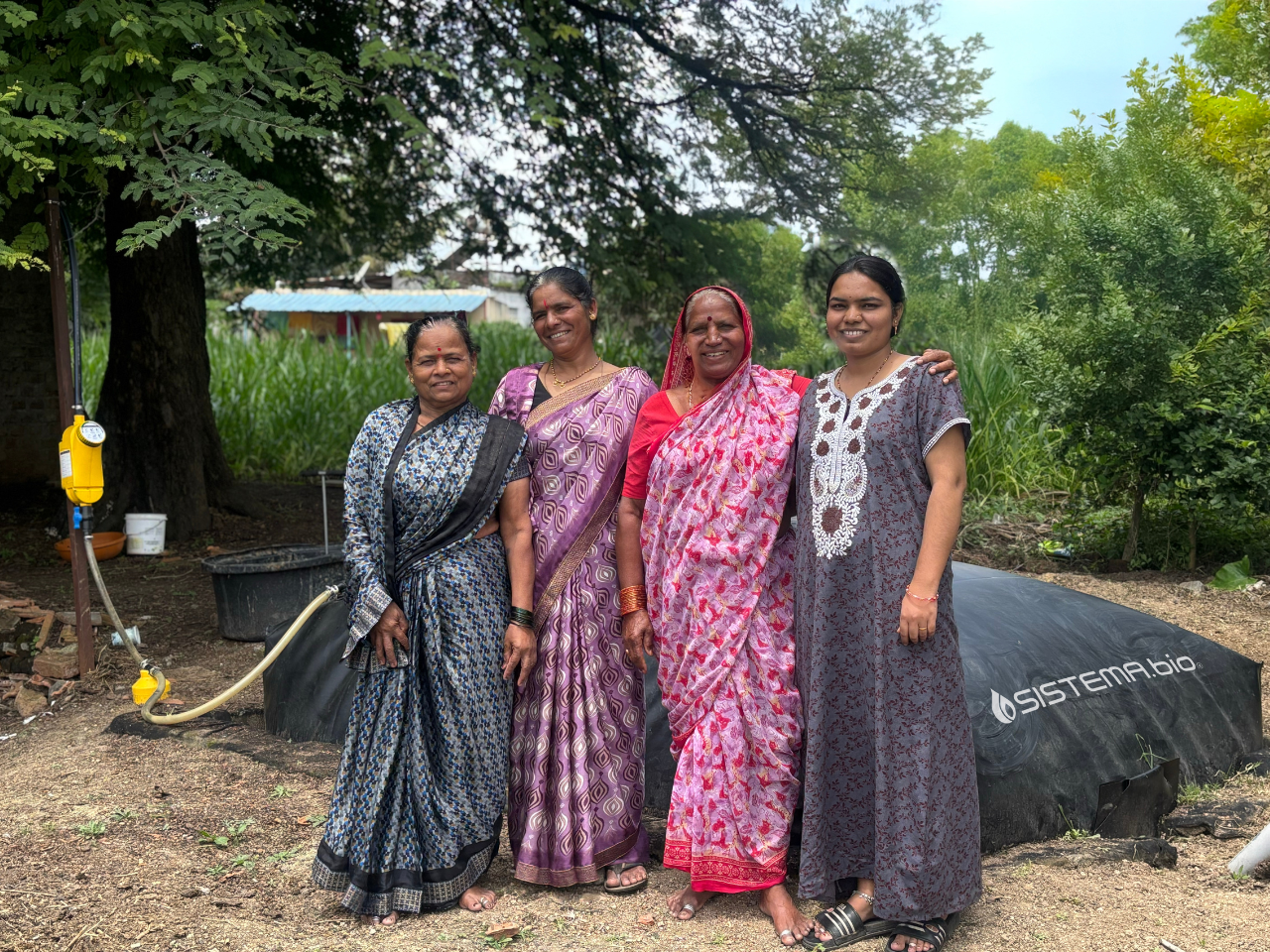
Sistema.bio, a global biogas technology and climate solutions provider, has announced the financial close and launch of FarmCarbon, a carbon finance vehicle aimed at directing global climate capital to smallholder farmers.
The facility has achieved its first close of USD 53 million, led by BNP Paribas Asset Management Alts (BNPP AM Alts), British International Investment (BII), and Shell Foundation. The initiative is designed to accelerate investment in climate-smart agricultural solutions while addressing emissions from small-scale farming systems.
Scaling Biodigesters and Emissions Reduction
FarmCarbon will support the deployment of more than 90,000 biodigesters globally. These systems are expected to capture and eliminate methane emissions, generating over 9 million tonnes of CO₂ equivalent reductions.
The initiative focuses on methane, a potent greenhouse gas with 28 times the warming potential of carbon dioxide over a 100-year period, according to the Greenhouse Gas Protocol. Methane is responsible for nearly 30 percent of global warming, with livestock contributing approximately 10 percent of global emissions.
Despite this, methane abatement currently receives only about 2 percent of tracked global climate finance flows.
Financing Model and Carbon Market Approach
Unlike traditional carbon finance mechanisms, FarmCarbon introduces a pre-financing model that enables early-stage funding for biogas projects. The model secures future emissions reductions, which are later delivered to carbon credit buyers through long-term agreements.
This approach allows farmers to access the economic value of future carbon credits upfront, reducing financial barriers to adopting biodigesters and enabling wider participation in carbon markets.
The platform incorporates pre-validation processes, digital monitoring, and robust legal frameworks to ensure transparency, traceability, and high-quality emissions reductions.
Economic and Livelihood Benefits for Farmers
Beyond emissions mitigation, FarmCarbon aims to improve farm-level economics. Biodigesters convert livestock waste into biogas and organic fertiliser, reducing household energy costs and reliance on chemical inputs.
The company stated that this transition can enhance farm productivity while creating additional income streams for smallholder and family farmers.
“Investing in infrastructure, financing, and services for smallholder and family farms is vital for global food system resilience. For 15 years, Sistema.bio has worked hand-in-hand with farmers in Asia, Africa and LATAM, installing biodigesters that capture methane from animal waste and convert it into a clean energy source—biogas—for thermal, mechanical, and electrical needs on the farm, as well as producing organic fertiliser. FarmCarbon takes this proven solution and makes it accessible at an even larger scale—paying the economic benefits of carbon credits forward to farmers, and empowering them to co-invest in energy, productivity, health and climate outcomes on their own farms,” said Alexander Eaton, CEO and Co-founder of Sistema.bio.
Investor Perspective and Climate Finance Gap
Investors highlighted the role of FarmCarbon in bridging the climate finance gap in agriculture, a sector often overlooked despite its significant emissions footprint.
“FarmCarbon shows how carbon markets can reach the level of high-quality that institutional investors and stakeholders expect,” said Jonathan Dean, Deputy Head of Natural Capital & Impact Private Equity at BNP Paribas Asset Management Alts. “This vehicle demonstrates how innovative financing addresses the cause and effect of climate change for smallholder farmers and vulnerable communities. By strengthening access to financing and embedding robust standards, this facility demonstrates how capital can flow into climate solutions at scale.”
Holger Rothenbusch, Managing Director and Head of Infrastructure and Climate at British International Investment, added, “At BII, we play a catalytic role in driving innovative financing solutions that aim to protect the planet, mitigate impacts of climate change and strengthen resilience for communities most affected. We are proud to support FarmCarbon, in partnership with Sistema.bio, BNP Paribas Asset Management Alts, and Shell Foundation, to channel more private capital into climate-positive solutions for smallholder farmers across Africa and Asia.”
Quality Assurance and Market Credibility
FarmCarbon’s first project has received an ex-ante AAe rating from BeZero Carbon and has been awarded the Core Carbon Principles (CCPs) label. The initiative incorporates digital Measurement, Reporting, and Verification (dMRV) systems to ensure high-quality and verifiable emissions reductions.
Sistema.bio also emphasised safety and reliability, noting that biodigester systems are supported by continuous monitoring, design improvements, and strict quality standards.
Economic Case for Methane Mitigation
Methane reduction through biodigesters is considered one of the most cost-effective and immediate climate actions. A 2025 study published in Science found that global methane mitigation delivers benefit-cost ratios of at least three times, rising to more than six times when health co-benefits are included.
The study also estimates the global social cost of methane at approximately USD 7,381 per tonne.
Aligning Climate, Capital, and Livelihoods
“Farmers need to increase their incomes. Investors need commercial returns on a product they can replicate. And the planet needs both to happen on a low-carbon pathway. FarmCarbon is a breakthrough that aligns all three. Shell Foundation is proud to support this transaction, helping unlock further investment and proving that this new model can work for people, markets, and the climate alike,” said Jonathan Berman, CEO of Shell Foundation.
FarmCarbon is currently engaging with businesses, governments, and organisations seeking to incorporate high-impact methane mitigation into their climate strategies. The platform aims to connect smallholder farmers, global capital, and carbon markets within a scalable financing structure.