
Gasum delivers biogas to Svalbard airport for emission reductions
The energy major has said that liquefied biogas (LBG Plus) has typically a negative Carbon Intensity (CI) score of -15 grams of CO2 eq/MJ.
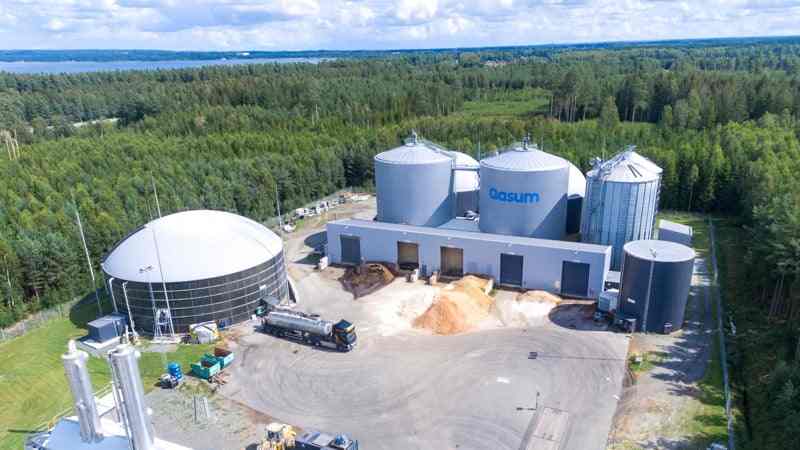
Finnish energy company Gasum has supplied liquefied biogas to Svalbard Airport, making it the northernmost and most remote destination ever served by the company. The airport operator, Avinor, chose Gasum ‘Biogas Plus’ to significantly cut greenhouse gas emissions and advance sustainable aviation operations.
Norwegian state-owned company Avinor has developed a biogas turbine concept for heating and electricity for the Longyearbyen airport at Svalbard. As part of this energy transition, Gasum now supplies liquified biogas (LBG) to the airport.
Svalbard is one of the northernmost inhabited areas in the world, located approximately 1,000 km north of Tromsø.
Due to the remote and northern location of Svalbard, reliable energy needs are fulfilled by fuel-based solutions. Energy needs at Svalbard have historically been covered by coal, which was replaced with diesel in 2023.
Reducing emissions in challenging conditions
State-owned Avinor operates a total of 43 airports around Norway. Until now, the Svalbard airport has represented 15-20% of Avinor’s total GHG emissions. The annual energy demand of the airport is 4 GWh.
“In challenging environments and energy intensive operations, electrification is not always a feasible solution. In those cases, switching to using biogas can have a huge positive impact. We look forward to seeing emissions reduce in the Svalbard islands with our continuing collaboration with Avinor”, says Ville Pesonen, Vice President, Industry and Traffic, Gasum.
“The use of biogas in our energy production at Svalbard Airport is a crucial step towards achieving Avinor’s climate goals by 2030,” says Karianne Helland Strand, EVP Sustainability and Infrastructure in Avinor.
Negative Emissions with Biogas Plus
This is the northernmost and most remote location Gasum has delivered LBG to, proving the viability of biogas as a source of low emission energy in even the most extreme environments. Gasum has also given training on the safe handling of LBG to personnel at Svalbard airport and rescue services.
LBG is a fully renewable fuel, with life-cycle greenhouse gas emissions that are, on average, 90 percent lower compared to traditional fossil fuels like diesel. Gasum’s LBG is produced using different types of waste streams such as biowaste, sewage sludge, manure and other industrial and agricultural side streams.
LBG Plus has typically a negative Carbon Intensity (CI) score of -15 grams of CO2 eq/MJ. This means that even a remote and isolated location such as Svalbard can utilize 100% renewable and carbon negative fuels for all energy needs.