Sumitomo led firm commences 112-MW biomass power project in Japan
The biomass power plant will have an annual generation capacity of about 800,000 MWh which is equivalent to the annual electricity consumption of roughly 260,000 households.

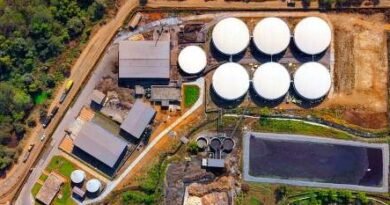
Sendai-ko Biomass Power GK has announced that it has commenced commercial operations of the Sendai Port Biomass Power Plant (“the Plant”) following completion of construction in November 2025. Power GK is jointly funded by Sumitomo Corporation, Tokyo Gas, Hokuriku Electric Power and Sumitomo Tohoku Co.
With an output of 112 MW and an expected annual generation of approximately 800,000 MWh (equivalent to the annual electricity consumption of roughly 260,000 households), the Plant is among Japan’s largest dedicated biomass power facilities. The Biomass Power plant will provide a long-term, stable supply of renewable energy in the Tohoku region and contribute to the advancement of carbon neutrality.
The Biomass Plant uses wood-based biomass fuels, including pellets and chips, derived from thinning timber, mill residues and lower-grade wood generated during forest management. All fuels are sourced from forests under recognized forest certification programs.
Sumitomo Corporation oversees fuel procurement, ensuring proper utilization of forest resources and maintaining full traceability. In this biomass project, the company aims to reduce greenhouse gas emissions as part of broader efforts to lower overall environmental impact through the use of renewable energy, while also pursuing sustainable business operations with due consideration for forest resources.
Sumitomo held that it wants to achieve carbon neutrality across all Group business activities by 2050 as part of its response to climate change. The company’s renewable energy equity generation capacity reached approximately 2 GW as of the end of March 2025. It will continue to contribute to a decarbonized society and a sustainable future through the development and operation of renewable energy projects in Japan and overseas.
Similarly, Tokyo Gas Group has pledged to pursue “the challenge of achieving net-zero CO2.” The company will continue collaborating with business partners to expand its renewable power portfolio with an emphasis on capital efficiency and investment discipline, while staying closely aligned with the needs of local communities and society.
Hokuriku Electric Power is working to expand its renewable energy adoption toward its target of “more than 1 million kW of renewable energy (3 billion kWh or more annually) by the early 2030s compared with FY2018.”